
Your record collection isn't just a stack of music. It's a personal archive, a library of carefully chosen artifacts that hold both sentimental and real-world value. That’s why the right vinyl record storage containers aren't a luxury—they're the single most important piece of insurance for your passion.
Why Proper Vinyl Storage Is Non-Negotiable
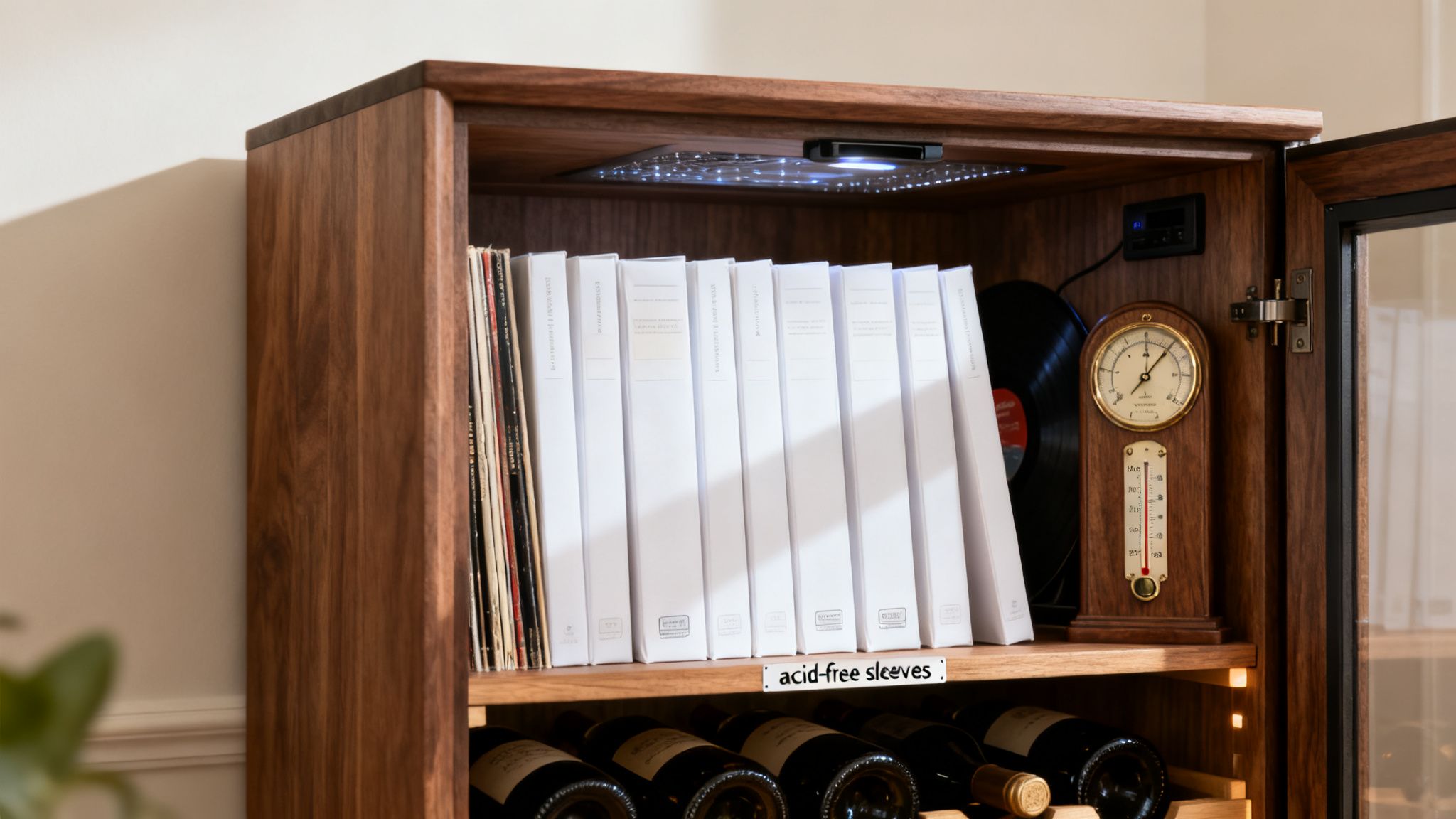
Think of your vinyl collection like a fine wine cellar. You wouldn't just leave a rare vintage out on the counter, would you? Your records are just as sensitive to their surroundings, and a few common mistakes can cause irreversible harm. Stacking them in a corner or leaving them out in the open might seem fine for a little while, but it’s a recipe for a slow-motion disaster.
There are a few silent enemies constantly working against your LPs:
- Heat and Sunlight: Direct sun is vinyl’s worst nightmare. It can warp a record in no time, rendering it completely unplayable. Even the steady warmth from a nearby heating vent can cause that delicate vinyl to bend over time.
- Humidity and Moisture: Too much moisture in the air is an invitation for mold to grow on your album sleeves and, even worse, the vinyl itself. This doesn't just ruin the artwork; it permanently damages the sound quality.
- Pressure and Weight: Stacking records flat is probably the single fastest way to destroy them. The uneven weight creates immense pressure that leads to warping and groove distortion.
- Dust and Debris: Every little particle that settles into the grooves acts like sandpaper when the needle hits it. This is what causes those pops and crackles, which eventually lead to permanent sound degradation.
Protecting Your Investment
This is about more than just keeping the music sounding good; it's about protecting a real investment. The global vinyl market is booming as more people rediscover the magic of physical media. With over 43 million records sold in the US last year alone, collectors are building seriously valuable libraries that need proper care.
It's no surprise that the market for storage solutions has grown into a USD 401 million industry—it’s a direct response to this need. You can learn more about the vinyl market's impressive growth in this detailed report.
Purpose-built vinyl record storage containers are your first and most critical line of defense. They are specifically designed to fight back against the environmental threats that can devalue your collection, ensuring each record stays as pristine as the day it was pressed.
Getting the right container is the foundational step in any good vinyl care routine. It truly is the difference between a collection that slowly falls apart and one that you can enjoy for decades to come.
For a deeper dive into a complete care routine, check out our guide on the art of collecting and protecting your vinyl records. For now, let's explore the different storage solutions out there to keep your music safe and sound.
Understanding Different Types of Record Storage
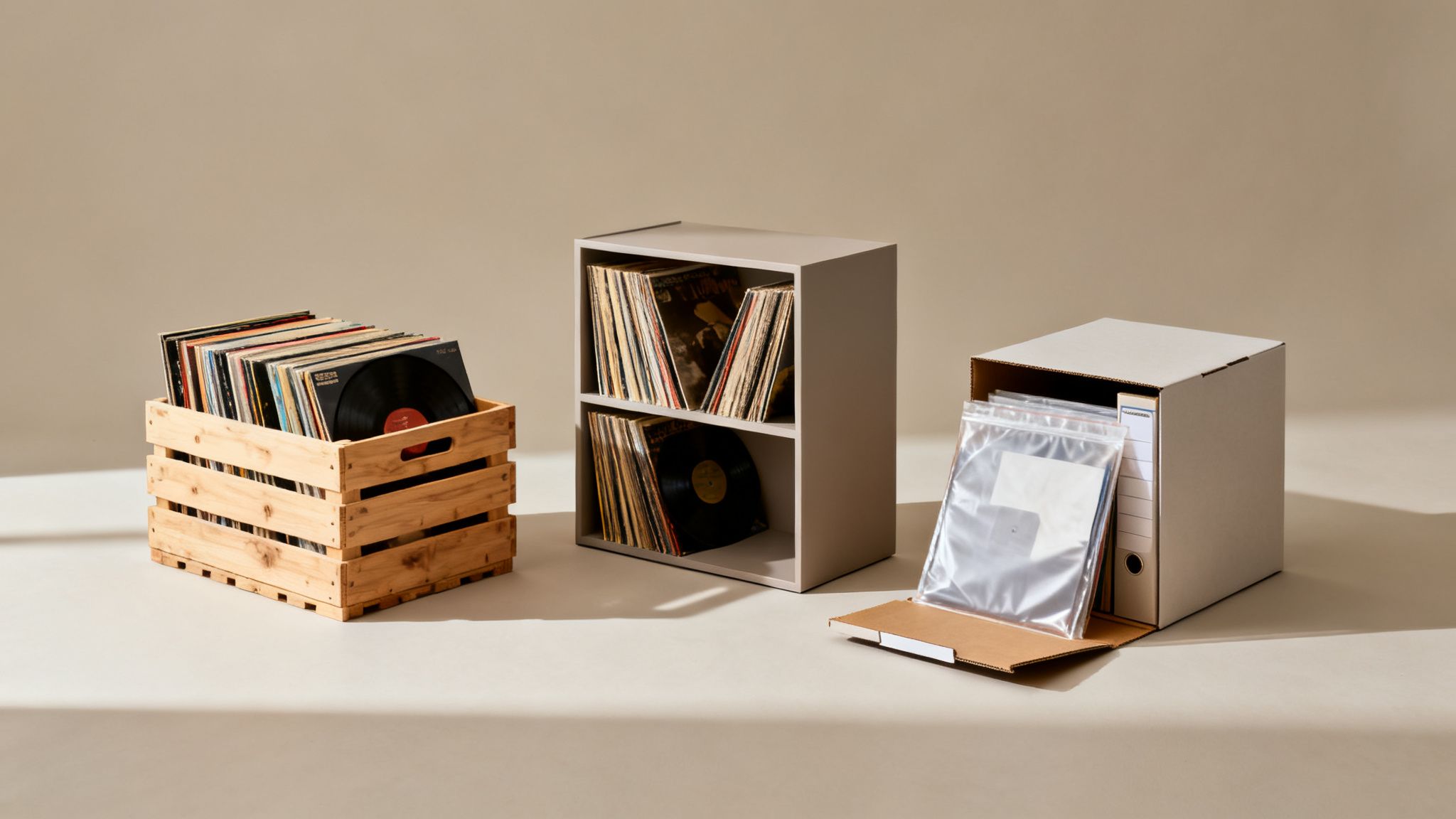
Finding the right home for your records is more than just tidying up; it’s about balancing the size of your collection, the space you have, and your own personal style. The world of vinyl record storage containers is pretty diverse, so let’s walk through the most common options to figure out what’s best for you.
Think of it like this: a few paperbacks can live on your nightstand, but a library of first editions needs a proper, sturdy bookcase. Your vinyl deserves that same level of care.
The Casual Crate
For anyone just starting their collection, or for those who keep a smaller, curated stack of favorites, the classic record crate is the go-to. These are usually simple, open-top boxes made of wood or plastic, perfectly sized to hold about 50 to 75 LPs.
What’s great about crates is how easy they are to use. The open top lets you flip through your albums just like you’re digging at a record store, which is half the fun. They’re also super portable, making it a breeze to move your tunes from room to room or take them to a friend’s place.
The downside? Crates don’t offer much protection from dust, pets, or sunlight. They’re a fantastic starting point, but you'll probably outgrow them as your collection gets bigger.
Dedicated Record Boxes
Once your collection starts to spill out of that first crate, it’s time to upgrade to dedicated record boxes. We’re talking about lidded containers made from sturdy cardboard, plastic, or even wood, all built specifically for 12-inch LPs.
These boxes are a huge step up in protection. That lid is your first line of defense against dust, light, and humidity. High-quality options, like the ones in the EVEO Collect line, are built tough with reinforced corners and solid handles, so you can stack them or move them without worry.
The real beauty of dedicated boxes is how they blend protection with scalability. You can start with one and just add more as you need them, creating a neat, uniform system that keeps your vinyl safe.
If you're looking for inspiration on how to organize your space, checking out different container storage ideas can give you some great starting points.
Stylish Shelving Units
For collectors who want their records to be part of their home's decor, nothing beats a dedicated shelving unit. These are furniture pieces designed with perfectly sized cubbies or shelves that turn your collection into a visual statement.
The IKEA Kallax is probably the most famous, but plenty of other brands offer beautiful options. Good shelving makes it easy to browse your collection while keeping every record stored safely upright. It’s the ideal setup for large collections, giving hundreds of albums a permanent, great-looking home.
The main trade-off is portability (or lack thereof) and, with open-faced units, dust. You also have to be very aware of weight. Vinyl is heavy—a single shelf of LPs can easily top 50 pounds!
Professional Archival Containers
If you’re a serious archivist or the proud owner of some truly valuable pressings, professional archival boxes offer the best protection money can buy. These aren’t just sturdy; they’re made from chemically inert materials designed for long-term preservation.
They are typically constructed from acid-free and lignin-free buffered board. This is a huge deal, as standard cardboard and wood can release acids over time that yellow your album art and make the sleeves brittle. An archival box actively neutralizes these threats, preserving your records for decades.
They may not be the most stylish option, but their job is pure preservation. When protecting rare and irreplaceable albums is your top priority, these vinyl record storage containers are the undisputed gold standard.
Comparing Common Vinyl Storage Solutions
To help you see everything at a glance, here’s a quick breakdown of the most popular storage types. Think about what matters most to you—accessibility, protection, or style—to find your perfect match.
| Storage Type | Best For | Capacity | Protection Level | Portability |
|---|---|---|---|---|
| Crates | New collectors, small collections, easy browsing | 50-75 LPs | Low | High |
| Dedicated Boxes | Growing collections, stacking, moving, protection | 50-80 LPs per box | Medium-High | High |
| Shelving Units | Large collections, display, home integration | 500+ LPs | Low-Medium | Very Low |
| Archival Containers | Valuable records, long-term preservation, archives | 40-60 LPs per box | Very High | Medium |
Ultimately, the best choice grows with your collection. You might start with a crate, move to boxes as you buy more, and finally invest in a beautiful shelving unit once your hobby becomes a full-blown passion.
Critical Features Every Storage Container Should Have
Choosing between a crate and a cabinet is a great start, but what really separates a good storage solution from a great one are the details. Not all vinyl record storage containers are created equal, and knowing what to look for will help you pick something that offers real, lasting protection for your collection. It’s like buying a car—you don’t just pick a color; you have to look under the hood.
The features that truly matter fall into three main buckets: the materials it's made from, how well it's built, and whether it’s designed for long-term archival safety. Nailing these three is the difference between a simple box and a genuine fortress for your LPs.
Material and Build Quality
The foundation of any worthwhile storage container is what it's made of. Each material brings its own pros and cons to the table.
- Wood: Gives you that classic, premium look and is incredibly sturdy. The catch? Untreated wood can release acids over time that can damage your album sleeves. If you go this route, always make sure the wood is sealed or properly finished.
- Plastic: A versatile choice—it's lightweight, durable, and often stackable. You’ll want to look for high-density, rigid plastics that won’t buckle under the weight of your records. Ventilated designs are a nice bonus to help prevent moisture buildup.
- Metal: Extremely durable with a sleek, industrial vibe. The main thing to watch out for here is rust, so ensure it has a protective coating. Also, check for any sharp edges that could tear up your album covers.
- Archival Board: This isn't your average cardboard. It’s a specialized, high-density material built specifically for preservation. It offers the perfect balance of strength and chemical safety.
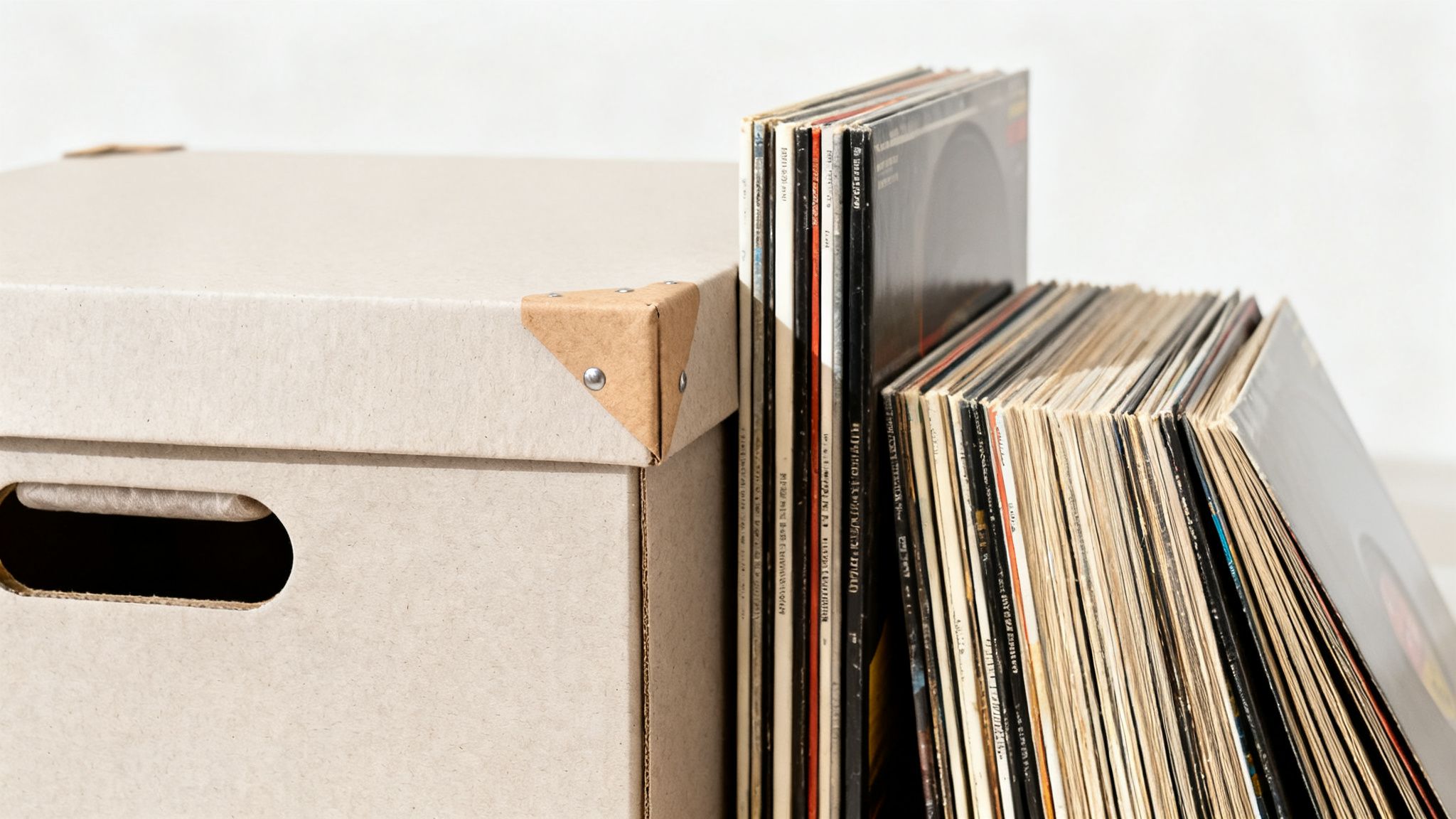
Beyond the raw material, pay attention to the craftsmanship. Reinforced corners are a huge plus, as they prevent crushing when you stack containers. Sturdy, comfortable handles are non-negotiable if you plan on moving your records around. A well-built box just feels solid and dependable in your hands, not flimsy.
The Golden Rule: Vertical Storage
There is one non-negotiable rule in the world of vinyl care: always store your records vertically. Stacking them flat, one on top of the other like pancakes, is the quickest way to ruin them.
Think of it like a stack of dinner plates. The plate at the very bottom is under immense, uneven pressure from everything above it. Your records are the same, only far more delicate. This pressure can cause permanent warping, groove damage, and that dreaded "ring wear" on the album art as the record inside presses against the sleeve.
Storing records upright, like books on a shelf, distributes pressure evenly and keeps the vinyl perfectly flat. This single habit is the most important thing you can do to ensure your collection lasts a lifetime.
Any quality storage solution, from a simple crate to a high-end cabinet, will be designed to hold records in this upright orientation. If it encourages flat stacking, it’s not designed for proper vinyl care.
Archival Safety: Acid-Free Materials
For long-term preservation, the chemical makeup of your storage is just as critical as its physical strength. The term you absolutely need to know is acid-free. Many common materials, like standard cardboard and some woods, contain acids that can leach out over time.
This acidic "off-gassing" is what causes the iconic yellowing and brittleness you see in old newspapers. It does the exact same thing to your album covers, slowly degrading the paper and fading that precious artwork.
- What to Look For: Keep an eye out for containers explicitly labeled "acid-free" or "archival quality." This is your guarantee that they are made from materials with a neutral pH.
- The 'Buffered' Advantage: Some archival materials take it a step further and are "buffered," meaning they contain an alkaline substance (like calcium carbonate) that actively neutralizes acids from the environment. This offers an extra layer of protection. For a deeper dive, our guide on using anti-static record sleeves is a great complementary read.
This intense focus on preservation is driving serious innovation. The vinyl record storage market is projected to grow from USD 410 million to USD 710 million as more collectors seek out better ways to protect their investments. We've moved beyond simple wooden crates; modern containers now include features like ventilated bins to combat moisture, which is critical when you learn that environmental factors cause up to 80% of record damage. Investing in proper materials isn’t just an expense—it’s the best way to safeguard the value and integrity of your collection.
How to Choose Storage for Your Space and Budget
Your record collection is a direct reflection of your personal journey, so it only makes sense that your storage should be just as personal. What works for a sprawling suburban listening room is going to be completely different from a smart setup in a tiny city apartment. Finding the right vinyl record storage containers isn't just about being tidy—it's about creating a system that truly works for you and your life.
Think about it like buying a bookshelf. You wouldn't cram a massive floor-to-ceiling unit into a studio, but a single little shelf won't cut it for a home library. The real sweet spot is finding that perfect balance between style, function, and the realities of your living space.
Solutions for Small Spaces
Living in a smaller apartment or a dorm room doesn't mean you have to skimp on protecting your records. It just means you have to get a little more creative. When every square foot is precious real estate, think vertically and look for furniture that can pull double duty.
- Go Vertical: Look for tall, narrow shelving that draws the eye upward and makes use of wall space that would otherwise just sit there. You’d be surprised how many LPs a single, well-placed tower can hold.
- Multi-Purpose Furniture: Media consoles or sideboards with built-in cubbies are a fantastic solution. They give you a surface for your turntable and other gear while neatly tucking your collection away below.
- Stackable Boxes: A modular approach with high-quality, stackable record boxes, like those from the EVEO Collect line, is incredibly efficient. You can arrange them to fit into odd spaces—like under a bench or inside a closet—and simply add more as your collection grows.
The whole idea is to weave your collection into your home so it feels like a natural part of the space, not just clutter.
Planning for Large Collections and Listening Rooms
If you’ve got the luxury of a dedicated listening room or just a lot of open space, your options really open up. The goal shifts from simply making everything fit to creating a truly immersive and accessible library.
Big, expansive shelving units are popular for a reason—they’re affordable, easy to scale, and put your entire collection on beautiful display. For a more polished aesthetic, custom-built cabinetry or a row of matching media consoles can create a stunning visual centerpiece. The biggest thing to keep in mind with large collections is the sheer weight. Remember that just 50 records can weigh around 30 pounds, so make sure your shelving and your floors can handle the load.
For those with absolutely massive collections or who are in the middle of a move, looking into professional storage units can be a lifesaver when you’ve run out of room at home.
Budget-Friendly But Safe Options
You don't have to break the bank to keep your records safe. While premium furniture is a beautiful investment, there are plenty of cost-effective vinyl record storage containers that put protection first.
A simple, well-built wooden or plastic crate is a classic for a reason. It keeps your records upright and makes it easy to flip through them. For a little more, archival-quality cardboard boxes offer excellent protection from dust and light without the high price tag. They might not be showpieces, but they're workhorses when it comes to preservation on a budget. The most important thing is to steer clear of flimsy, cheap options and always stick to the golden rule: store them vertically. Never sacrifice safety to save a few bucks.
Transporting Your Collection Safely
Sooner or later, your records will need to hit the road, whether you're moving across town or just taking a few favorites to a friend's place. This is when your vinyl is at its most vulnerable, exposed to bumps, drops, and sudden temperature changes.
This is where sturdy, lidded record boxes with solid handles become absolutely essential. They act as a protective shell, keeping your LPs secure and shielded from the world. For some extra peace of mind, think about popping an EVEO AirTag holder on your main transport case. It’s a small addition that lets you track your most valuable cargo, giving you one less thing to worry about whether you're moving to a new house or just heading to a listening party.
A Complete Care Routine Beyond the Box
A great vinyl record storage container is your collection's first line of defense—a fortress against the big enemies like heat, pressure, and light. But the fight for pristine audio doesn't stop there. The battle continues on a microscopic level every single time you pull a record out for a spin.
Think of it like a classic car. You keep it in a garage to protect it from the elements, but it still picks up road grime every time you take it for a drive. In the same way, your records are exposed to dust, static, and oils from your hands the moment they leave their sleeves. That's why a truly complete care routine has to go beyond just storage.
The Ever-Present Threats of Dust and Static
When a record is spinning on your turntable, it's essentially a magnet for every airborne particle in the room. Dust, pet dander, and other tiny bits of debris are drawn right to the surface, where they settle deep into the grooves. This is the source of all those dreaded pops, clicks, and crackles that can ruin a listening session.
Static electricity just makes the whole problem worse. The simple act of pulling a record from its sleeve can create a static charge, making dust cling to the vinyl for dear life. Over time, this buildup acts like fine-grit sandpaper against your turntable’s stylus, wearing it down and, even worse, permanently damaging the delicate walls of the grooves.
A consistent cleaning routine isn’t just about keeping things looking tidy; it’s about actively preserving the high-fidelity sound that makes vinyl so special. Pairing top-notch storage with a solid cleaning regimen is the only way to ensure your records sound incredible for decades. For more in-depth tips, our guide on how to handle vinyl records is a great place to start.
Building Your Essential Cleaning Toolkit
You don’t need a science lab to keep your records in great shape. A few key tools will make all the difference, with each one playing a specific role in maintaining your collection.
- Anti-Static Carbon Fiber Brush: This should be your go-to tool before every single play. The ultra-fine carbon fibers get right down into the grooves to lift out dust, and they simultaneously neutralize static so new particles aren't immediately attracted back to the surface.
- Microfiber Cloth: A high-quality, lint-free microfiber cloth is your best friend for gently wiping away fingerprints and surface smudges. It's infinitely better—and safer—than the sleeve of your t-shirt or a paper towel.
- Specialized Cleaning Solution: For a more thorough cleaning, a dedicated vinyl cleaning fluid is a must. These formulas are designed to dissolve grime and residue without leaving behind a film that can gunk up your stylus and muffle the sound.
The goal of a cleaning routine is simple: ensure that the only thing your turntable's needle ever touches is the pure, clean vinyl of the record groove. Everything else is just noise.
As the vinyl market continues to boom, seasoned collectors know that protection is everything. It's a sobering fact that 60% of record damage is caused by everyday dust and improper handling. In a market where a stack of unprotected records can warp in a warm, humid room and lose 20% of their value, combining proper storage and cleaning isn't a luxury—it's a necessity. Discover more insights about the vinyl market's growth on zionmarketresearch.com. An all-in-one kit, like the EVEO 4-in-1 set, gives you everything you need to build a reliable maintenance habit, protecting both the sound and the value of your cherished collection.
Making the Right Choice for Your Collection
Okay, you’ve got the rundown on materials, types, and what it takes to keep your records happy. Now comes the fun part: picking the perfect home for your collection. The truth is, there's no single "best" vinyl storage container. The right choice is the one that fits your records, your space, and your listening habits like a glove.
To get there, let’s start with a few simple questions.
First off, how big is your collection right now? And more importantly, where do you see it going? If you're hovering around 50 of your favorite albums, a cool tabletop crate might be all you need. But if you're a serious collector with 500 records and no sign of stopping, you’ll want a system that can grow with you, like stackable boxes or a beefy shelving unit.
Matching Storage to Your Lifestyle
Next, take a look around your room. What’s the goal here? Are you trying to create a show-stopping display, cram a growing collection into a tiny apartment, or just make sure your records can survive a move?
- For Display: If you want your album art to be part of your decor, open-faced shelving is the way to go. It turns your collection into a browsable art gallery.
- For Small Spaces: When every square inch counts, think vertically. Tall shelving, stackable boxes, and media consoles that pull double duty are your best friends.
- For Portability: Need to move your records, whether to a new apartment or a DJ gig? You absolutely need sturdy boxes with lids and solid handles. No exceptions.
Finally, what's your budget? You don't have to break the bank to protect your vinyl. High-quality archival cardboard boxes offer fantastic, acid-free protection for a bargain. On the other end, custom-built wood cabinetry is a serious investment in both function and style. Being honest about these three things—size, space, and budget—will pretty much point you directly to the ideal solution.
This handy decision tree shows how storage is the cornerstone of a complete vinyl care routine.
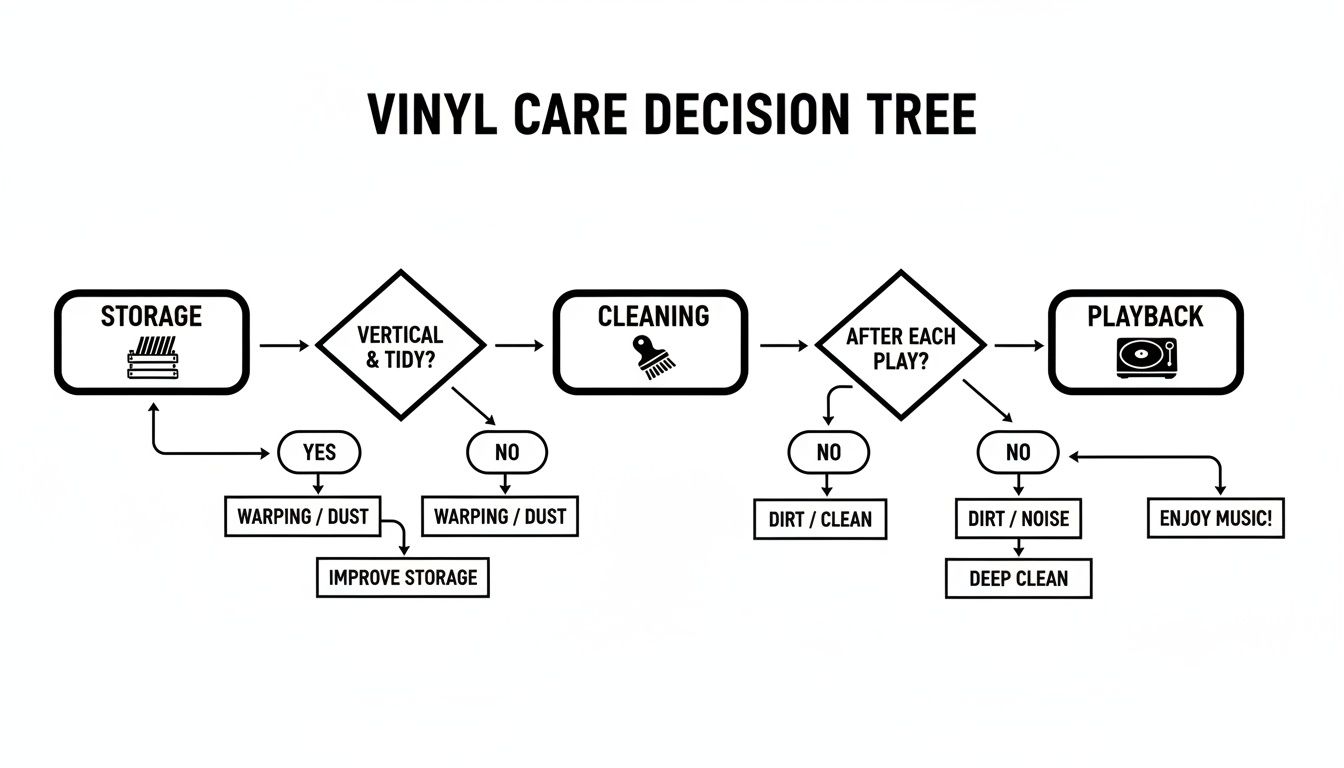
As you can see, getting the storage right is step one. Everything else, from cleaning to playback, builds on that solid foundation.
Think of it this way: investing in proper storage is an investment in the future of your music. It ensures the joy your collection brings you today will still be there for decades, preserving the sound, the art, and the memories etched into every single groove.
Got Questions About Vinyl Storage? We've Got Answers.
Jumping into vinyl collecting, or even just getting serious about organizing what you have, always brings up a few key questions. Everyone wants to do right by their records, but sometimes the "right way" isn't obvious. Let's clear up some of the most common things people ask when it comes to keeping their vinyl safe and sound.
How Many Records Can I Actually Fit in One Box?
Most record boxes you'll find are built to hold somewhere between 50 and 80 LPs. But that's not a hard and fast rule. The real number depends entirely on your collection—thick gatefold sleeves and those heavy 180-gram pressings take up a lot more space than a standard single LP.
The trick is to pack them snugly so they stand upright without leaning, but not so tight you have to wrestle an album out. If a box says it holds 75 records, you might find that 65 is the sweet spot if you’ve got a lot of double LPs. A little breathing room is your friend.
Is the Garage or Attic a Safe Bet for Storage?
Honestly, probably not. Unless your attic or garage is climate-controlled like the rest of your house, it’s a vinyl nightmare waiting to happen. These spaces are famous for wild temperature swings and humidity, which are vinyl's two biggest enemies.
Heat is the fast track to warped records, and humidity is an open invitation for mold and mildew to ruin your album covers.
Expert Tip: If a room in your house isn't comfortable for you to hang out in year-round, it's not comfortable for your records either. Stick to closets, spare rooms, or living areas where the temperature is stable.
What's the "Perfect" Temperature and Humidity for Records?
Vinyl is happiest in a place that’s cool, dry, and dark—think of it as a vampire, but with better taste in music. The sweet spot for temperature is between 65°F and 75°F (18°C to 24°C). More important than the exact number, though, is consistency. You want to avoid those big, sudden shifts from hot to cold that make the vinyl expand and contract.
For humidity, try to keep it around 40-50%. This keeps the cardboard sleeves from getting damp and musty without letting them get so dry that they become brittle.
Can I Just Use Some Old Cardboard Boxes I Have Lying Around?
It's tempting, for sure, but please don't. That standard moving box from the hardware store is a bad long-term home for your records. For starters, most generic cardboard is full of acid, which will literally yellow and eat away at your album sleeves over time. They also just aren't built to handle the sheer weight of vinyl.
Always go for proper vinyl record storage containers. Look for boxes made from archival, acid-free materials and built with reinforced corners. They're designed specifically for the weight and chemical safety your collection needs to stay in mint condition for decades to come.
Ready to give your collection the five-star treatment it deserves? The EVEO Collect line features archival-quality storage boxes and all the cleaning gear you need to preserve your records for a lifetime. Check out the full collection at eveo.store and build the perfect home for your music.
How to Flatten Warped Vinyl Your Practical Guide
How to Clean Your Computer Screen Without Damaging It