

If you're serious about your vinyl, anti-static record sleeves are the single most important accessory you can own. Think of them as the ultimate defense against the static and dust that can permanently ruin your records, causing those pops, clicks, and scratches that kill the listening experience.
That standard paper sleeve your record came in? It’s basically fine-grit sandpaper. Every time you pull the record out, you're risking microscopic damage to your investment.
Why Your Vinyl Collection Needs Anti Static Sleeves
Anyone who collects records understands the investment. It’s not just about money; it’s about the time and passion you put into curating a library of music you love. But there's a silent enemy constantly at work against every pristine groove: static electricity. This invisible force is more than a minor hassle—it's a direct threat to the sound and longevity of your vinyl.

Most records, new or used, come tucked inside sleeves made of coarse, acidic paper. When you slide a record out, the friction creates a powerful static charge. This instantly turns your vinyl into a magnet, attracting dust, hair, and any other tiny particles floating in the air.
The True Cost of Static and Dust
It’s easy to shrug off a little dust, but the damage it causes is serious and irreversible. As your turntable’s stylus traces the groove, it doesn’t just nudge that debris aside. It grinds those sharp particles right into the delicate vinyl walls.
This is the root cause of all those dreaded audio problems:
- Pops and clicks that jump out during the quietest moments of a song.
- Surface noise and a persistent hiss that clouds the music's detail.
- Accelerated wear on both the record and your stylus, shortening the life of both.
Over time, this damage builds up. A once-perfect album can slowly degrade into a noisy, frustrating mess. That's why treating protection as an afterthought is one of the biggest mistakes a collector can make.
An anti-static sleeve isn't just an accessory; it's essential insurance for your collection. It safeguards the sound quality and protects the financial and emotional value of every record you own.
The Definitive Solution for Preservation
This is where anti static record sleeves come to the rescue. Unlike their cheap paper counterparts, these sleeves are made from materials like High-Density Polyethylene (HDPE), which is specifically engineered to be non-abrasive and to dissipate static charges. By neutralizing the static, they stop dust from sticking to your records in the first place.
Upgrading your inner sleeves is one of the easiest and most impactful steps you can take in a solid vinyl care routine. For a complete overview, you can learn more about how to clean, store, and protect your vinyl records in our full guide. It's a simple, affordable change that delivers immediate results and ensures your collection will sound amazing for decades.
Understanding How Static Damages Your Records
To really get why anti-static record sleeves are a non-negotiable for any serious collector, you first have to understand the invisible enemy your vinyl is up against. The whole problem starts with a bit of simple physics that happens every single time you touch a record: friction.
Remember rubbing a balloon on your hair as a kid? That friction builds up an electrical charge, making your hair stand on end. It’s the exact same thing with your records. Vinyl is made from Polyvinyl Chloride (PVC), a material that’s naturally great at building up and holding onto a static charge.
The Science of Static Attraction
When you pull a record out of a basic paper or cheap plastic sleeve, the friction creates a surprising amount of static across its surface. In an instant, that beautiful black disc turns into a powerful magnet for anything and everything floating in the air.
Suddenly, your record is actively grabbing:
- Dust from the air, your shelves, and your turntable mat.
- Pet dander and tiny fibers from your clothes.
- Lint and other microscopic gunk you can’t even see.
This isn't just about your record looking a bit dusty. This is the root of the problem. All that debris gets pulled deep into the delicate microgrooves where the music is physically stored.
A static charge is the silent killer of sound quality. It attracts the very particles that create pops and clicks, opening the door to permanent, irreversible groove damage.
From Dust to Permanent Damage
The real harm happens the second your stylus hits the groove. Your turntable’s stylus is an incredibly sensitive piece of equipment, designed to trace every tiny contour to reproduce the sound. When it runs into a piece of dust, it doesn’t just nudge it out of the way.
The immense pressure and heat created right at that tiny point of contact can literally grind the debris straight into the vinyl walls. That pop or click you hear? That’s the sound of the stylus hitting an embedded particle or the scar it left behind. Play that record over and over, and you're slowly but surely grinding it down, adding more and more surface noise with each spin.
Why Anti-Static Sleeves Are the Answer
This is exactly what anti-static record sleeves were engineered to stop. They’re not just a fancy way to store your records; they are a practical tool designed to break this destructive cycle before it even starts. By using materials like High-Density Polyethylene (HDPE), these sleeves prevent static from building up in the first place.
With no static charge, your record stops being a dust magnet. It stays clean while you handle it and while it’s in storage. This means when you finally put it on the platter, your stylus is tracing a clean, pure groove. It’s a simple, preventative step that’s absolutely key to preserving your sound quality, protecting your stylus, and making sure your favorite albums sound amazing for years to come.
Comparing Different Types of Record Inner Sleeves
Not all inner sleeves are created equal, and honestly, the ones that come with most records are doing more harm than good. If you've ever pulled a brand-new record out of its sleeve and seen it covered in paper dust or faint scuffs, you know exactly what I'm talking about.
Understanding the difference between the cheap paper sleeves, the slightly better poly sleeves, and the archival-grade options is the single most important step you can take to protect your collection for the long haul.
The Problematic Paper Sleeve
Let’s start with the most common offender: the standard-issue paper sleeve. Think of it as temporary packaging, not a permanent home for your vinyl.
These sleeves are often made from coarse, acidic paper that acts like fine-grit sandpaper every time you slide the record in and out. This friction is what causes those annoying "sleeve scuffs" and introduces pops and crackles into your playback.
Even worse, that friction builds up a ton of static electricity, turning your beautiful black vinyl into a magnet for every speck of dust in the room.
- Abrasive Surface: Creates fine scratches that add unwanted surface noise.
- High Static Generation: Attracts dust and debris that get ground into the grooves.
- Acidic Material: Can cause slow chemical damage to the vinyl over many years.
This is a pretty simple chain reaction: friction is the root of the problem, leading to static, which then attracts the debris that ruins your listening experience.
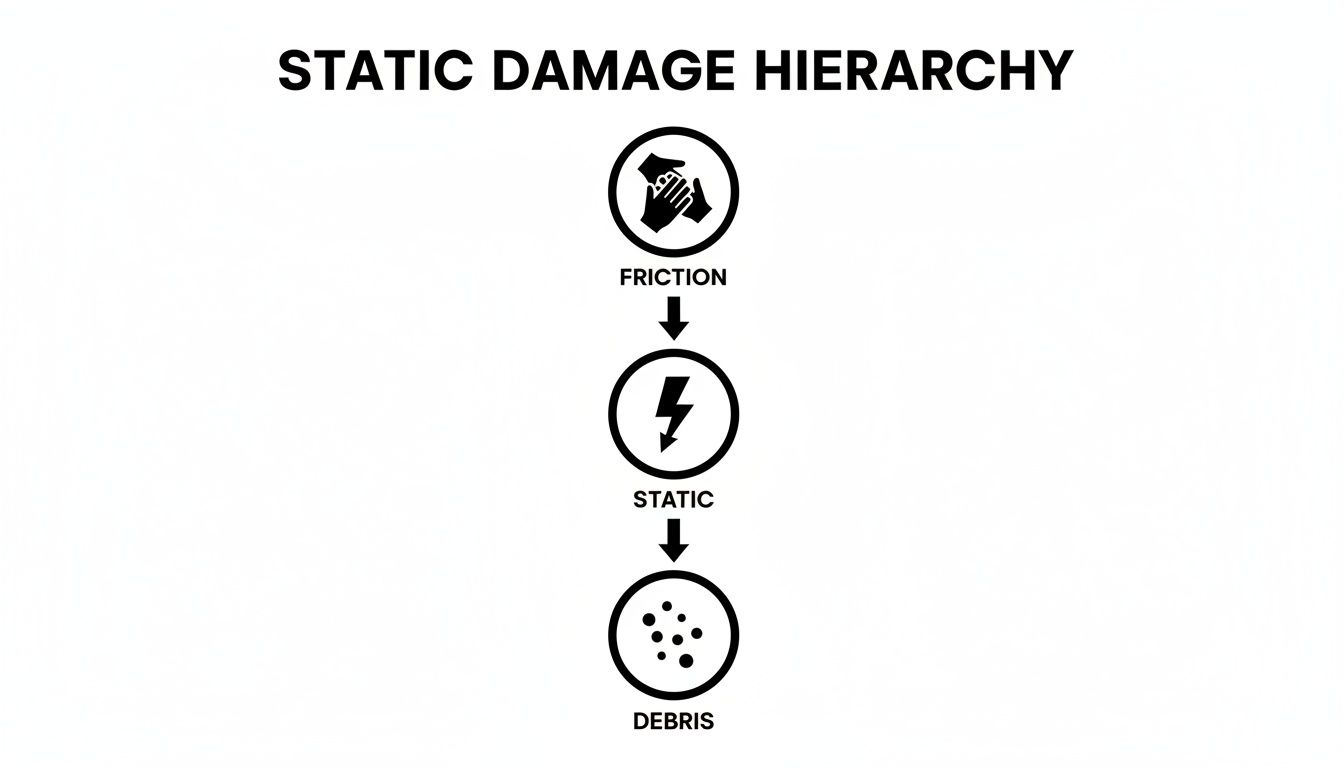
Once you see it laid out like this, it’s clear that getting rid of friction and static is the key to keeping your records pristine.
A Step Up: Basic Polyethylene Sleeves
Okay, so paper is out. The next logical step for many collectors is a simple, often round-bottomed, polyethylene (poly) sleeve. These are definitely an improvement.
Their smooth plastic surface is way less abrasive than paper, which immediately cuts down on the risk of scuffs and scratches. But they aren't the final answer. While they're smoother, basic poly sleeves can still generate a surprising amount of static, meaning you're still fighting a losing battle against dust. They're better, but they don't solve the core problem.
The Gold Standard: Multi-Ply Anti-Static Sleeves
This is where the real magic happens. For serious collectors who want true archival-level protection, the ultimate solution is the multi-ply anti-static record sleeve. You'll often hear them called "rice paper" sleeves, and they are engineered from the ground up to eliminate static and keep your records safe.
These sleeves aren’t just a simple piece of plastic. They usually have a three-layer design: a sturdy, acid-free paper layer is sandwiched between two layers of incredibly smooth high-density polyethylene (HDPE). That HDPE is the secret weapon—it’s a naturally anti-static material that lets your record glide in and out with almost zero friction.
The genius of the multi-ply design is that it gives you the best of both worlds: the structure and feel of paper combined with the silky, non-abrasive, and anti-static qualities of high-end plastic.
This superior design is why these sleeves have become a must-have for any serious collector. With the vinyl market booming—over 40 million new records were sold in the U.S. in 2023 alone—the demand for quality accessories has exploded. Collectors are gladly moving past the $0.10 basic poly sleeves and investing in proper protection, with anti-static sleeves ranging from $0.50 to $1.20 each.
To make it simple, here’s a quick breakdown of how the different sleeve types stack up.
Comparison of Inner Record Sleeve Materials
| Sleeve Type | Material | Protection Level | Pros | Cons |
|---|---|---|---|---|
| Standard Paper | Coarse, Acidic Paper | Poor | Cheap, comes with the record. | Abrasive, high static, acidic. |
| Basic Poly | Low-Density Polyethylene | Fair | Non-abrasive, better than paper. | Flimsy, still generates static. |
| Anti-Static | HDPE & Archival Paper | Excellent | Eliminates static, non-abrasive, rigid, archival quality. | Higher initial cost. |
When you see it all laid out, the choice is pretty clear. Paper sleeves are actively damaging your records, and basic poly sleeves are just a temporary fix.
Only true anti-static record sleeves offer the complete protection your collection deserves. If you're ready to make the upgrade, our 12" Master Vinyl Record Inner Sleeves deliver the archival-grade quality you need to keep your records sounding incredible for a lifetime.
How to Choose the Right Anti-Static Record Sleeves
Walking into the world of record sleeves can feel a bit overwhelming at first, but it doesn't have to be. Once you know what to look for, picking the right protection for your vinyl is simple. Think of it less as buying a sleeve and more as investing in armor for your collection. The right materials and construction make all the difference.
Your first and most important focus should be the material. The undisputed gold standard for inner sleeves is virgin High-Density Polyethylene (HDPE). This isn't just any plastic. Unlike cheaper alternatives, HDPE is incredibly slick and non-abrasive, letting your records slide in and out without a hint of friction. This single quality is what prevents those tiny sleeve scuffs and static crackles that drive collectors crazy.
Insist on Archival-Grade Quality
Beyond the type of plastic, you'll want to look for sleeves specifically labeled "archival-grade." This isn't just fancy marketing speak; it's a promise that the sleeve is built for long-term preservation. An archival-grade label guarantees the sleeve is both acid-free and lignin-free, which are two of the most important factors in preventing your collection from slowly decaying over time.
Lignin, a natural polymer found in paper, breaks down and releases acids that can eat away at your record covers and even the vinyl itself. Choosing an acid-free sleeve means you’re placing your records in a chemically stable home, protecting them for decades.
When you choose an archival-grade sleeve, you're not just buying a piece of plastic. You're investing in a chemically inert safe-haven that actively prevents the slow, silent damage caused by inferior materials.
Examine the Sleeve's Construction
How a sleeve is put together is just as crucial as what it's made of. The best anti-static sleeves use a three-ply construction, often called the "rice paper" style. This design sandwiches a sturdy, acid-free paper layer between two whisper-thin layers of that slick HDPE.
This design gives you the best of all worlds:
- Structural Integrity: The paper core adds just enough rigidity to stop the sleeve from crumpling up when you slide a record back into its jacket.
- Ultimate Protection: With HDPE on both the inside and outside, you get a smooth, static-free surface touching your record and the inside of the album cover.
- Perfect Fit: The best sleeves are cut precisely for a standard 12" LP. They should be snug enough to prevent the record from shifting around, but not so tight that it's a struggle to get it in or out.
The Cost Versus Value Debate
Let's be honest: premium anti-static sleeves cost more. That initial price can make any collector pause, especially when cheap paper or basic poly sleeves are right there for a fraction of the cost. But this is a classic case of looking at the price tag instead of the long-term value.
The price gap is real. High-quality anti-static sleeves usually run between $0.50 to $1.20 a piece, while basic poly sleeves can be as cheap as $0.10 to $0.30. Top-tier brands like Mobile Fidelity might even cost $2.10 for a combo inner and outer sleeve. You can find more examples of premium record sleeve pricing on Walmart.com.
But spending a little more upfront is one of the smartest moves you can make. Think about it. You might spend $30, $50, or even hundreds on a single rare album. Does it really make sense to risk that investment just to save a dollar on its sleeve? The cost of replacing just one damaged record is far more than the cost of protecting your entire collection properly. A good sleeve is a one-time investment that preserves the irreplaceable value of your music for a lifetime.
Best Practices for Handling Your Records and Sleeves
Owning the best anti static record sleeves is a huge step, but how you handle your records every single day is what really preserves your collection. The right technique is just as important as the gear itself, turning a good habit into a complete system for vinyl preservation. This is where your investment in quality protection truly pays off.
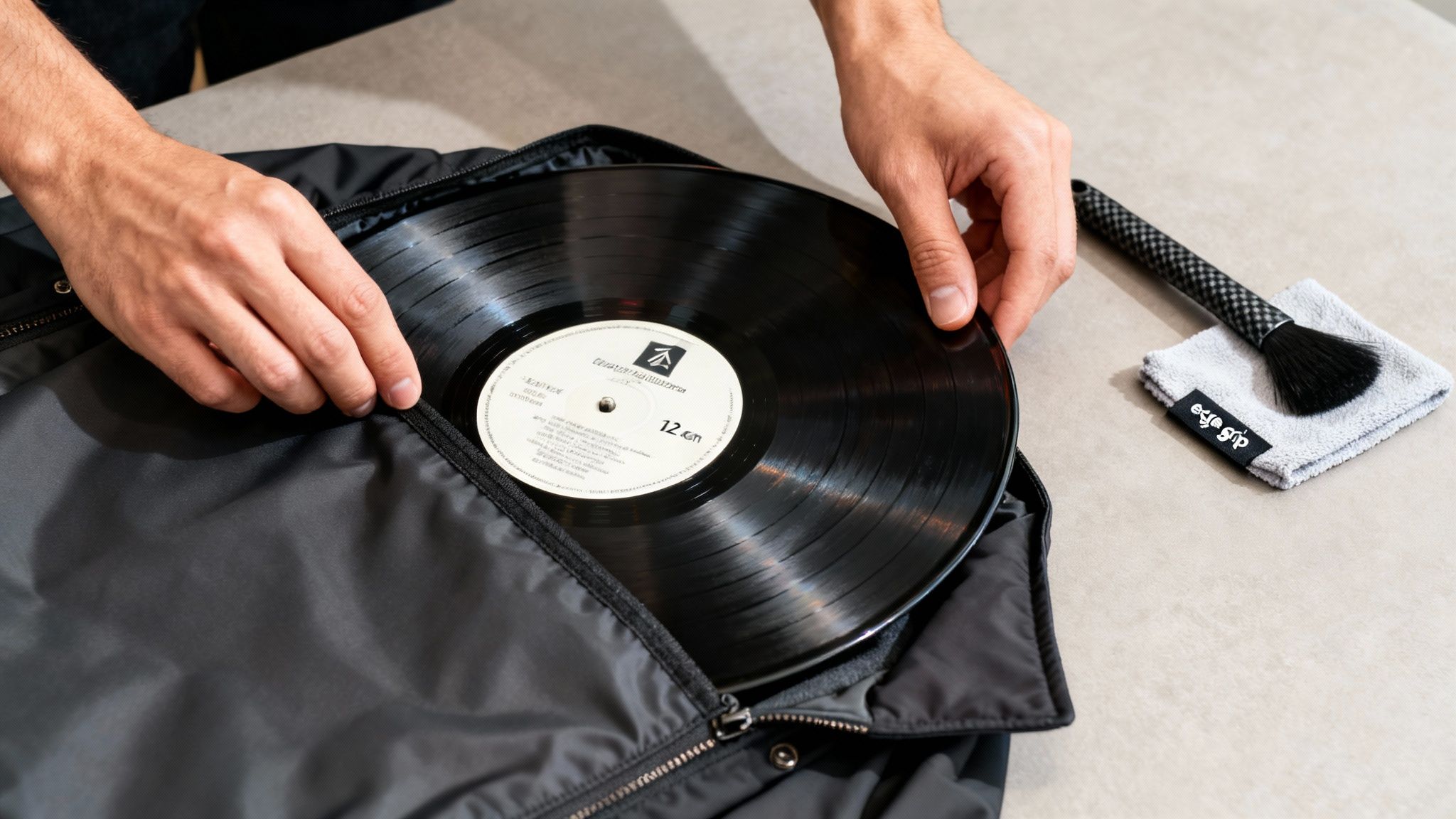
Think of it like a surgeon handling their instruments—with precision, care, and a consistent routine. Every touch matters. When you get these habits down, you’re ensuring your records stay pristine for decades to come.
The Golden Rule of Handling Vinyl
Before a record even gets near a sleeve, you have to master the art of holding it. The golden rule is simple but non-negotiable: only touch the record by its outer edge and the center label.
Your fingertips naturally have oils and dirt that can easily transfer into the grooves. Once they're in there, they become magnets for dust, leading to those dreaded pops and clicks that can cause permanent damage over time. Sticking to the edges and label is the easiest way to keep the playing surface completely clean.
A Step-by-Step Guide to Removing and Re-Sleeving
The enemy of a clean record is friction. It creates static. The way you pull a record out and put it back can make a massive difference. Make this simple process a habit every time you play an album.
-
Gently Slide, Don't Pull: Lay the album jacket on a clean, flat surface. Reach in and gently pinch the inner sleeve and the record's edge together, sliding them out slowly as one unit. Never just yank the record out by itself—that's a recipe for friction and scuffs.
-
Handle with Care: With the sleeved record now out of the jacket, carefully slide the vinyl out of its anti-static sleeve, remembering that golden rule. Place it directly onto your turntable platter.
-
The Pre-Play Ritual: This is maybe the most crucial part of any listening session. Before the needle drops, give the record a quick, gentle sweep with a carbon fiber anti-static brush. This little move lifts any dust that settled on the surface and kills any minor static charge, guaranteeing clean, crisp sound from the very first note.
Proper handling and a pre-play brush cleaning are the two pillars of vinyl preservation. The anti-static sleeve protects the record in storage, while your careful technique and pre-play routine protect it during use.
Smart Storage Inside the Jacket
When the music's over, how you put the record away is just as important as how you took it out. Re-sleeving properly gives you an extra layer of defense against dust.
First, slide the record back into its anti static record sleeves. Then, as you slide it back into the outer cardboard jacket, position the opening of the inner sleeve so it faces upwards, not sideways.
This tiny tweak creates a nearly perfect seal, making it much tougher for dust to sneak in while the album is on your shelf. It’s a simple trick that seriously boosts protection. For collectors looking to build out a complete care system, a premium vinyl record cleaner kit can provide all the essential tools in one place.
By combining top-tier sleeves with these best practices, you create a complete, closed-loop system of protection. This holistic approach ensures every record in your collection stays in immaculate condition, sounding just as incredible as the day it was pressed.
Common Questions About Anti Static Record Sleeves
Even after you're sold on why they’re a must-have, a few questions always pop up. Getting the details right is the final step to making sure your vinyl is truly protected, giving you total peace of mind. Let’s tackle some of the most common queries and myths floating around.
Think of this as your quick-reference guide. It’s here to clear up any lingering confusion and help you feel confident you're doing the absolute best for your collection.
Do I Need Both Inner and Outer Record Sleeves?
Yes, you absolutely do. Using both isn't overkill; it's the gold standard for complete, archival-level protection. They serve two totally different—but equally critical—purposes.
Here’s the simplest way to think about it: the inner anti-static sleeve is there to protect the music itself. Its entire job is to shield the delicate vinyl surface from the micro-scratches, dust, and static that cause all those annoying pops and clicks. It’s the last line of defense for the grooves.
The outer sleeve, on the other hand, is the album art’s bodyguard. It protects the cardboard jacket from shelf wear, scuffed corners, moisture, and the dreaded ring wear. Using both is the only way to keep the record and its original packaging in pristine shape, which is essential for preserving its long-term value.
How Often Should I Replace My Anti Static Sleeves?
Here’s the best part about investing in quality protection: you shouldn't have to. A high-quality, archival-grade anti-static sleeve is designed to last a lifetime. The anti-static properties aren’t some coating that wears off; they are built right into the High-Density Polyethylene (HDPE) material.
The only time you'd ever need to replace a sleeve is if it gets physically damaged—like a tear, a nasty crease, or if it gets soiled by something. For almost every record in your collection, upgrading to a premium inner sleeve is a one-and-done purchase.
A quality anti-static sleeve isn't a disposable item; it's a permanent home for your record. Its protective qualities are built into the material, ensuring it will last as long as the vinyl it's safeguarding.
This durability is exactly why they offer such incredible value over the long haul. You won’t be buying replacements every few years like you would with cheap, flimsy alternatives.
Can Anti Static Sleeves Remove Existing Static?
This is a really important distinction. While these sleeves are amazing at preventing new static from building up, they don’t actively discharge a record that’s already crackling with electricity. Their main job is preventative—creating a neutral, safe environment for storage.
If you pull a record from an old paper sleeve and it’s a static magnet, sliding it into an anti-static sleeve won’t magically suck the charge out. To neutralize static that’s already there, you need the right tools:
- A Carbon Fiber Brush: A quick, gentle sweep before you play will ground the charge and lift away any loose dust.
- An Anti-Static Gun: These gadgets release ions that instantly neutralize the static field on the record's surface.
- A Wet Cleaning System: For a really stubborn charge, nothing beats a thorough wash with a proper record cleaning machine.
Once you’ve zapped that static, storing the record in a quality anti-static sleeve ensures it won’t come back. You’re effectively breaking the cycle of static buildup that happens every time you handle and store your vinyl.
Are Rice Paper Sleeves Really Made From Rice Paper?
This is one of the biggest myths in the vinyl world. The name "rice paper" is just a nickname that stuck because of the way they look, not what they're made of. There is zero actual rice paper in these sleeves.
The name comes from that thin, translucent paper you see sandwiched inside. In reality, these are almost always three-ply sleeves, carefully engineered for the best protection. The construction is typically:
- A smooth layer of non-abrasive HDPE plastic that makes direct contact with the record.
- A middle layer of thin, acid-free paper that adds structure and rigidity.
- An outer layer of HDPE plastic to prevent friction against the album jacket.
The smooth HDPE is what does all the heavy lifting—providing the anti-static and scratch-proof qualities. The paper is just there to add a bit of stiffness so the sleeve doesn't crumple up when you slide it back into the jacket. So, while the name is catchy, it's the advanced plastic that's truly protecting your record.
At EVEO, we believe in providing solutions that offer everyday efficiency and peace of mind for the things you value most. Our accessories are designed to help you organize and protect your cherished collections with reliable, high-quality products. Discover how our tools can elevate your listening experience by visiting us at https://eveo.store.
How to clean vinyl records: Restore sound and protect your collection
How to Clean a Vinyl Record and Restore Perfect Sound