
That snap, crackle, and pop isn’t always the charming nostalgia you’re looking for. More often than not, it’s the sound of dust and grime getting in the way of your music. A high-quality vinyl record cleaning fluid is the single most important tool for any collector, designed to gently lift contaminants from the grooves, bring back sonic clarity, and protect your investment for years to come.
The Unsung Hero of Hi-Fi Sound
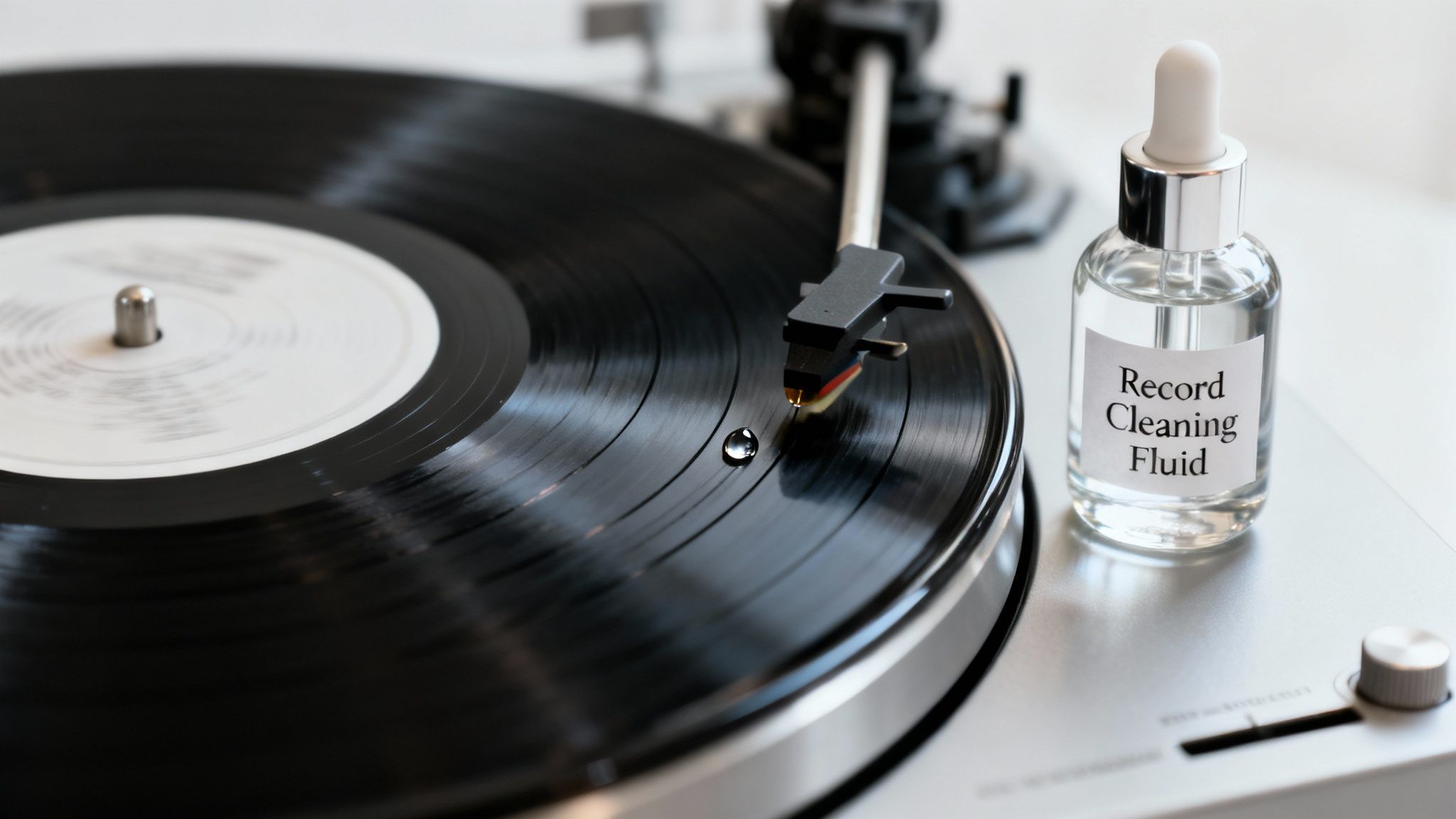
Think of vinyl cleaning fluid as the secret ingredient that turns a good sound system into a truly breathtaking audio experience. It's not just "soap"—it's a specialized formula engineered to dissolve and lift away the microscopic gunk that even the finest brushes can’t reach. This isn’t about making your records look shiny; it’s about preserving the very integrity of the sound itself.
Without a proper clean, all that debris can get mashed into the grooves, causing permanent damage and slowly degrading the audio quality. A dedicated fluid makes sure every note is heard exactly as the artist intended, free from the annoying noise of a dirty record. For anyone serious about their collection’s lifespan and sound quality, this is a non-negotiable step. We dive deeper into this in our guide on https://eveo.store/blogs/news/the-art-of-collecting-how-to-clean-store-and-protect-your-vinyl-records.
Why Dedicated Fluid Is Essential
Reaching for tap water or household cleaners is a huge mistake. These can leave behind mineral deposits or harsh chemicals that eat away at the delicate vinyl surface. A purpose-built solution, on the other hand, is formulated to be tough on grime but completely safe for your records.
Here’s what it really does for you:
- Reduces Static Buildup: Most quality fluids contain anti-static agents. This is huge, as it stops dust from being immediately attracted back to the record surface right after you’ve cleaned it.
- Improves Stylus Tracking: A clean groove is a smooth ride for your turntable’s stylus. It can track more accurately, which means clearer sound and less wear and tear on both your needle and the record.
- Preserves Album Value: It’s simple—well-maintained records don’t just sound better, they also hold their value. For serious collectors, this is a major consideration.
The growing obsession with pristine audio has fueled some serious market growth. The global vinyl record cleaner market was recently valued at $450 million and is on track to hit $710 million by 2033. This surge shows just how passionate collectors are about preserving the unique sound of artists like Three Drives on Vinyl for generations to come.
Here's the rewritten section, crafted to sound completely human-written and natural, following the provided style guide and requirements.
How Cleaning Fluid Actually Brings Your Records Back to Life
Think of a record's groove as a microscopic canyon, with walls holding all the music you love. Over time, that canyon gets clogged with all sorts of junk—dust, oils from fingerprints, leftover gunk from the manufacturing press, and statically charged particles. This is what causes all those annoying pops, clicks, and the muffled sound that can ruin a listening session.
Just wiping this canyon with a dry cloth is like trying to sweep a dusty street with a single broom. You'll just push the dirt around. This is where a high-quality vinyl record cleaning fluid steps in, and it does a lot more than just get the surface wet. It's a specialized formula designed to perform a safe and delicate excavation.
The Science of a Deep Groove Clean
It all comes down to chemistry. A really good cleaning fluid works on two main levels. First, it has to get into the absolute deepest, narrowest parts of that microscopic canyon. Plain water can't do this; its surface tension is too high, causing it to just bead up and skate right over the top of the groove.
To get around this, cleaning fluids use surfactants. These are compounds that smash the fluid's surface tension, allowing it to flow deep into the groove and make direct contact with every last speck of grime. It’s like adding soap to water—suddenly it becomes "wetter" and can sneak into tiny crevices it couldn't reach before.
A fluid without good surfactants is just cleaning the surface. The real damage to your sound happens deep down in the grooves, and only a solution with low surface tension can get in there to dissolve the stubborn stuff.
Once the fluid has seeped into the groove, other active ingredients get to work. These are carefully chosen solvents and detergents that are tough enough to dissolve oils and lift away solid particles, but gentle enough not to damage the delicate PVC vinyl itself.
Lifting and Suspending Debris
This is the most important part of the whole process. After breaking down all the gunk, the fluid has to hold it in suspension. This keeps the dirt from just settling right back into the groove as the fluid dries. Instead, the debris is lifted away from the vinyl walls and held floating within the liquid.
This ensures that when you wipe the fluid away with a microfiber cloth—or when a record cleaning machine vacuums it up—you're getting rid of the grime for good. Here’s a quick look at how it all works:
- Penetration: Surfactants let the fluid sink into the entire depth of the groove.
- Dissolving: Cleaning agents break down oils, residues, and other stuck-on contaminants.
- Lifting: The dissolved grime is pulled off the groove walls.
- Suspension: All that junk is held securely within the fluid, away from your record's surface.
Ultimately, this is how a vinyl record cleaning fluid turns a noisy, lifeless record into one with a silent background and punchy, clear sound. It’s a chemical rescue mission that restores the physical path for your stylus, letting you hear the music exactly as it was meant to be heard.
Decoding the Formula: Safe vs. Harmful Ingredients
Not all record cleaning solutions are created equal. Let's be honest, staring at the ingredients list on a bottle of vinyl record cleaning fluid can feel like you're back in high school chemistry class. But figuring out what's inside is absolutely critical. A great formula is a delicate balancing act, designed to lift away grime without harming the sensitive vinyl surface.
The best and safest fluids are always built on a few core components. Each one has a specific job, and they all work together as a team to restore your record's sound.
This is the kind of simple, powerful transformation a quality cleaning fluid can deliver.
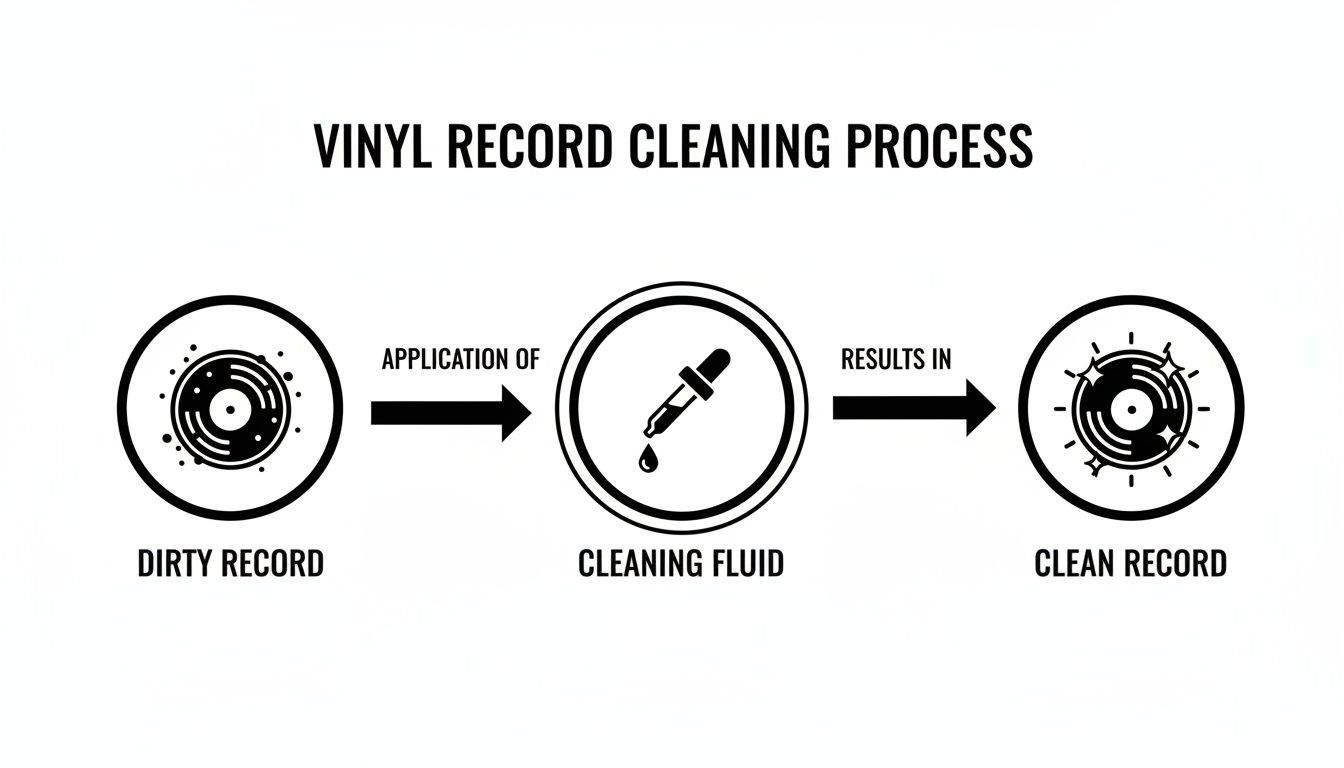
This whole process hinges on the fluid's ability to get deep into the grooves and lift out contaminants—without causing any damage.
The Anatomy of a Safe Cleaning Fluid
A top-tier vinyl record cleaning fluid always puts safety first. When you're scanning the label, these are the good guys you want to see. They're a clear sign that the product was made with your collection's longevity in mind.
- Purified Water: This is the absolute foundation of any good formula. We're talking ultra-pure, deionized, or distilled water—it's non-negotiable. Unlike what comes out of your tap, it has zero mineral deposits, which means no nasty residue gets left behind in the grooves.
- Gentle Surfactants: Think of these as the heavy lifters. Surfactants are special wetting agents that break the surface tension of the water. This allows the fluid to seep into the deepest, tiniest parts of the groove where the most stubborn gunk likes to hide.
- Anti-Static Agents: Static is a dust magnet. A quality fluid will include something to neutralize the static charge on your record's surface, which helps it stay cleaner for much longer after you've put it away.
Hazardous Ingredients to Avoid at All Costs
Knowing what shouldn't be in your fluid is just as important as knowing what should. Some common chemicals can cause irreversible damage, slowly stripping away protective layers and degrading the vinyl itself. Be very, very careful with any DIY recipes or off-the-shelf products that contain these troublemakers.
Using the wrong chemical on your vinyl is like using sandpaper to clean glass. The damage might not be visible at first, but it is permanent and will eventually ruin the listening experience.
Make sure to steer clear of any formula that includes:
- High-Concentration Isopropyl Alcohol: While a tiny percentage can be okay in certain pro-level formulas, high concentrations (over 20%) can be a disaster. It slowly leaches the plasticizers out of the PVC, making the vinyl brittle and noisy over time.
- Tap Water: As we mentioned, tap water is loaded with minerals like calcium and magnesium. When the water evaporates, those minerals get left behind as a hard, crusty residue deep in the grooves. You'll end up with more noise than you started with.
- Household Cleaners: Products like Windex, dish soap, or all-purpose sprays are a huge no-no. They contain ammonia and harsh detergents that were never meant for delicate vinyl. They can permanently etch the surface and leave behind sticky films that are a nightmare to remove.
To make it even clearer, here’s a quick breakdown of the common ingredients you'll encounter and what they mean for your records.
Vinyl Cleaning Fluid Ingredients: Safe vs. Harmful
| Ingredient | Purpose in Cleaning Fluid | Safety for Vinyl Records | Potential Risks If Misused |
|---|---|---|---|
| Purified/Distilled Water | Acts as the primary solvent and carrier for other agents. | Completely Safe | None. It's the ideal base for any cleaning fluid. |
| Gentle Surfactants | Reduce surface tension, allowing the fluid to penetrate grooves. | Safe | Using the wrong type (like dish soap) can leave a residue. |
| Anti-Static Agents | Neutralize static charge to prevent dust attraction after cleaning. | Safe | Generally very safe when included in a balanced formula. |
| Isopropyl Alcohol | Can act as a drying agent and solvent for greasy fingerprints. | Cautionary | High concentrations (>20%) can make vinyl brittle. Avoid unless it's a very low percentage in a professional mix. |
| Household Cleaners | N/A - Not intended for vinyl. | Harmful | Can contain ammonia and harsh detergents that permanently damage grooves. |
| Tap Water | N/A - Not recommended for vinyl. | Harmful | Leaves mineral deposits in the grooves, causing clicks and pops. |
Ultimately, choosing the right vinyl record cleaning fluid is an investment in the health and longevity of your collection. By understanding what makes a formula safe, you can pick a product that cleans deeply while preserving your most cherished albums for decades to come.
Choosing the Right Fluid for Your Collection
Picking the perfect vinyl record cleaning fluid isn’t about finding one miracle bottle. It's about matching the right formula to your collection and your cleaning routine. A casual listener with a few dozen LPs has totally different needs than a serious audiophile with a high-end ultrasonic cleaner.
It can feel like there are a million options out there, but don't get overwhelmed. The decision really just boils down to understanding a few key types of fluids and what they’re designed to do. Your goal is simple: find something that cleans deeply, safely, and fits into your life.
For most people, a pre-mixed, all-in-one spray solution hits that sweet spot. It’s ready to go right out of the box, so you don't have to mess with dilution ratios or worry about getting the formula wrong. That convenience is a huge win for keeping up with regular cleaning.
Match the Fluid to Your Cleaning Method
How you clean your records makes a huge difference in what kind of fluid you should reach for. A formula made for a simple brush and cloth probably won't cut it in a complex machine, and vice-versa.
-
Manual Cleaning (Brushes and Cloths): If you’re using a velvet brush or microfiber cloth, a ready-to-use spray is your best friend. These fluids are made to work with a little bit of elbow grease, helping lift grime so the brush can sweep it all away. Plus, they're designed to evaporate cleanly without a trace.
-
Spin-Clean Systems: Those manual bath-style cleaners usually need a concentrate that you mix with distilled water. The fluid has to have great surfactant properties to get the job done as the record spins through the cleaning bath.
-
Record Cleaning Machines (RCMs): Vacuum-based RCMs are a step up, and they need fluids that spread easily and don't get sticky. This lets the solution get deep into the grooves and then be completely suctioned off, pulling all the loosened dirt out with it.
-
Ultrasonic Cleaners: This is the deep-cleaning big leagues, using tiny cavitation bubbles to blast away gunk. These machines require special, often enzyme-based concentrates that work in an ultrasonic bath without creating a foamy mess. You can dive deeper into how different tools work in our guide to the best record cleaner kits.
All-in-One Sprays vs Concentrates
The world of vinyl record cleaning fluid is bustling, with brands like Big Fudge, Boundless Audio, and EVEO all offering popular options. It's no surprise that liquid solutions dominate the market over gels—they’re just more versatile for everyone from family hobbyists (who make up 45% of the market) to professional record stores. You can find more details in this vinyl record cleaner trends analysis.
This really brings you to the main choice you'll have to make: a simple, ready-to-go spray or a bulk concentrate you mix yourself.
While concentrates can seem more economical for cleaning large collections, a high-quality, pre-mixed solution guarantees a perfectly balanced, lab-tested formula every single time. This removes the risk of mixing errors that could leave residue on your records.
For the vast majority of vinyl lovers, a balanced, ready-to-use fluid is simply the better way to go. It’s the perfect blend of safety, convenience, and high performance, making it the most practical tool for keeping your collection pristine. It means you can give a record a quick, effective clean before every play without a second thought—and that’s the real secret to lifelong audio fidelity.
Using Cleaning Fluid with Brushes and Machines
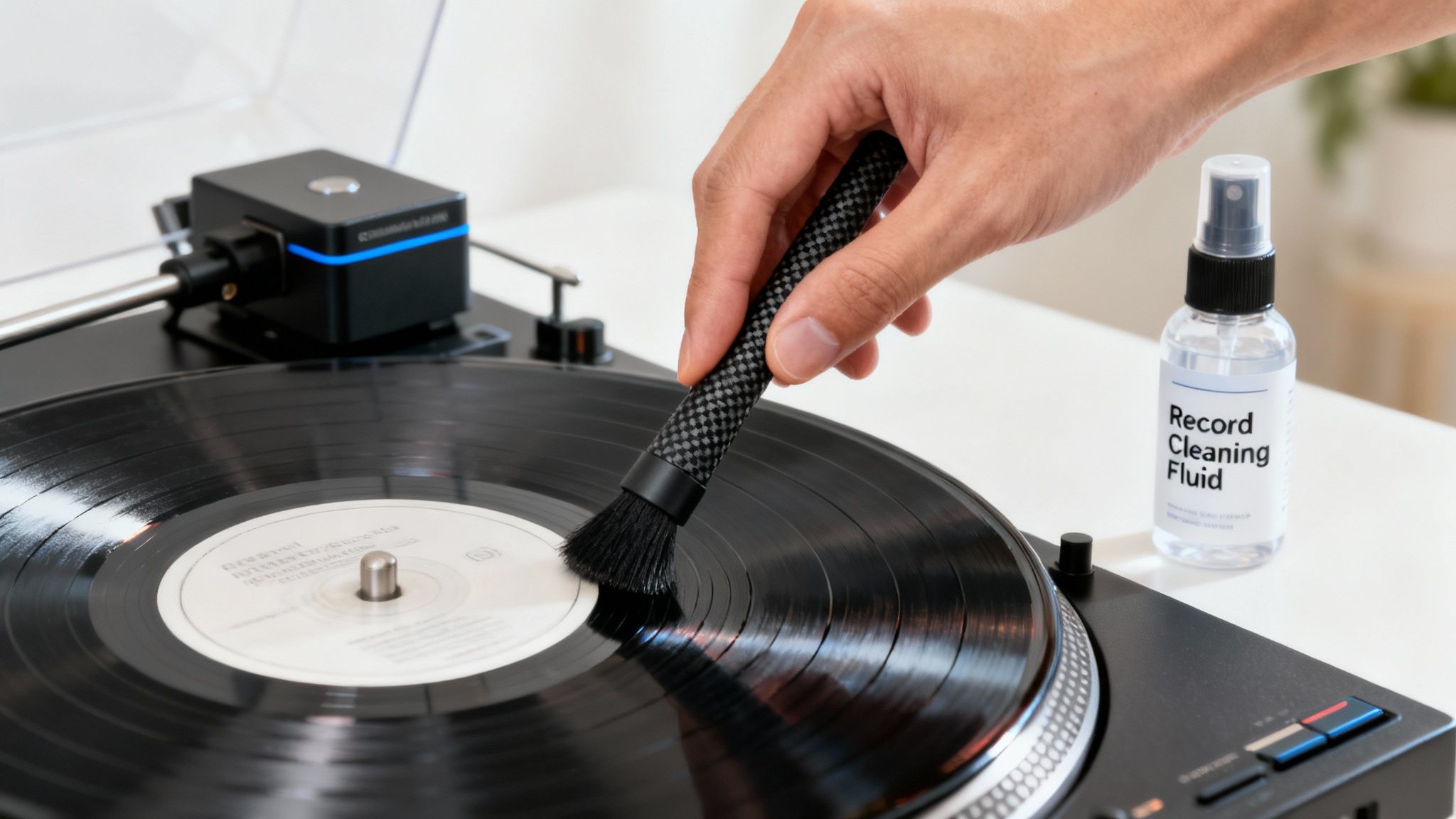
Even the best vinyl record cleaning fluid is only as good as the way you use it. Whether you prefer a hands-on approach or a more automated system, the right technique is what lets the fluid work its magic, getting deep into the grooves to lift away years of accumulated grime.
The most common method, and a ritual for many collectors, is manual cleaning with a brush. It's a simple, effective process that’s perfect for routine maintenance and for anyone who enjoys that tactile connection with their records. The key is gentle, deliberate motion.
The Art of Manual Cleaning
For manual cleaning, you’ll typically be using a carbon fiber or velvet record brush. The goal isn't to scrub the record like you're washing a dish. Instead, you're guiding the fluid as it dissolves contaminants, letting the brush fibers gently sweep them away.
Here’s a simple process for a flawless manual clean:
- Apply the Fluid: Lightly spritz the record surface, applying just enough to create a thin, even layer. Always be careful to avoid spraying the label.
- Follow the Grooves: Place the brush on the record so it makes full contact. With the platter rotating, just hold the brush steady and let the fluid and fibers do the heavy lifting.
- Wipe and Dry: After a few rotations, angle the brush to gently lift the debris off the record. Follow up with a clean, lint-free microfiber cloth to wipe away any remaining moisture, always moving with the grooves.
This hands-on approach is not just effective—it's also affordable. You can see what a great manual setup looks like in our complete 4-in-1 vinyl records cleaning kit.
Synergy with Cleaning Machines
For collectors seeking a truly deep clean, specialized machines offer automation and precision. These systems are where the right fluid becomes absolutely critical to getting peak performance. A record cleaning machine (RCM), for example, applies the fluid and then uses a vacuum wand to suction it—and all the suspended dirt—right off the record.
Ultrasonic cleaners take this a step further, using high-frequency sound waves to create microscopic bubbles in a cleaning bath. The fluid in these systems must have excellent surfactant properties to ensure the bubbles can form and collapse effectively, blasting away contaminants from the deepest part of the groove.
This all points to a growing ecosystem around record preservation. The professional record cleaning service sector was valued at $0.04 billion recently and is expected to hit $0.08 billion by 2035. This growth complements the $64.2 million global market for record cleaning machines, where the right vinyl record cleaning fluid is essential fuel for the fire.
You can dive deeper into this holistic preservation ecosystem if you're curious. Understanding this synergy ensures you get the most out of your fluid, no matter your setup.
Frequently Asked Questions
Even after you've got a handle on how vinyl record cleaning fluid works, a few real-world questions always pop up. Let's tackle the most common ones so you can use your fluid with confidence and keep your collection sounding its best.
How Often Should I Clean My Records?
There’s no single magic number here—it really depends on the record's condition and how often it hits your turntable. But a good routine is your best defense for preserving sound quality for the long haul.
- For brand-new records: Give them a clean before their very first spin. This is non-negotiable. It gets rid of any mold-release agents left behind from the factory pressing process.
- For used or thrift-store finds: A deep clean is mandatory before that record even thinks about meeting your stylus. You just never know what kind of microscopic gunk is hiding in those grooves.
- For records in your collection: A solid rule of thumb is to clean them every 5-10 plays. Of course, if you see visible dust or hear that tell-tale crackle and pop getting louder, it's time for a clean.
Standard Fluid vs. Audiophile Fluid
Is there actually a difference, or is it just clever marketing? While plenty of high-quality, all-in-one fluids do a fantastic job, there are some distinctions. "Audiophile" solutions often refer to more complex, multi-step systems. These might include special enzymatic formulas designed for heavy-duty restoration on extremely dirty or valuable records.
For the vast majority of collectors, a well-made, ready-to-use vinyl record cleaning fluid is the perfect sweet spot. It offers excellent performance and convenience for regular upkeep, knocking out common grime without overcomplicating things.
Can I Use This Fluid on Old 78 RPM Records?
Nope. Absolutely not. This is probably one of the most critical rules in record care. Modern cleaning fluids are specifically designed for PVC-based vinyl, which is what 33 ⅓ and 45 RPM records are made of.
Your old 78 RPM records, on the other hand, are made from shellac—a totally different and much more fragile material. The ingredients in modern vinyl fluid, particularly certain alcohols, will literally dissolve the shellac, permanently destroying the record. If you’re cleaning 78s, you must use a cleaning solution made specifically for shellac.
Ready to bring back that rich, clear sound and protect your collection for years to come? Trust EVEO for a perfectly balanced cleaning solution that’s safe, effective, and simple to use. Explore our vinyl care products at EVEO today.
A Practical Guide to Using a Record Player Stylus Brush
A Guide to Using a Phono Stylus Cleaner for Perfect Sound