
For many collectors, the best place to start is a hands-on manual kit, like the EVEO 4-in-1. It's an effective, affordable, and surprisingly satisfying way to keep your records sounding incredible. These kits give you all the essential tools to tackle dust and static without a huge investment, making them a perfect fit for new enthusiasts and seasoned audiophiles alike.
Why Your Vinyl Collection Demands a Great Cleaning Kit
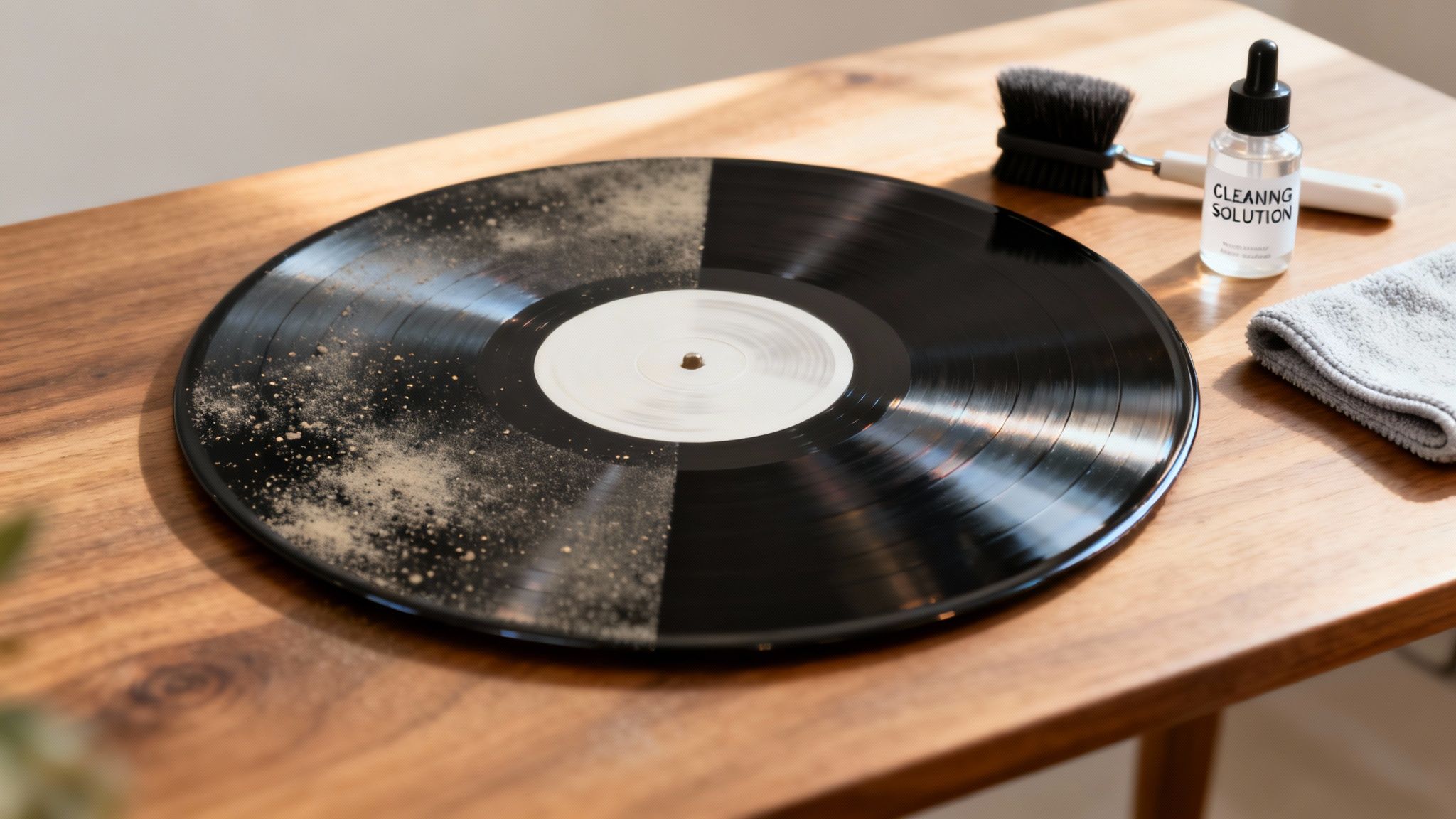
There’s nothing like that warm, iconic crackle just before the music kicks in. It’s part of the magic. But the clicks, pops, and hisses from a dirty record? That’s just noise, and it’s a sign that your collection’s silent enemies—dust and grime—are winning.
Think of your records like a classic car. You wouldn’t just hit a vintage beauty with a garden hose and call it a day. You’d detail it, carefully, to preserve its performance and value. Your vinyl deserves that same level of care. Microscopic dust, oils from your fingertips, and static all conspire to degrade your records every time they’re handled.
The Unseen Damage to Your Records and Stylus
This buildup of gunk does more than just create annoying surface noise. It actively harms your gear and your music. As the stylus glides through the grooves, it grinds these tiny particles against the delicate vinyl walls, causing permanent wear.
This process doesn’t just ruin the record; it takes your stylus down with it. A dirty stylus can't track the groove accurately, leading to muffled, distorted sound and even faster damage. Proper cleaning isn't just a chore—it’s an essential act of preservation that ensures your favorite albums sound their best for decades.
A clean record lets the stylus sit deeper in the groove. The result is better tracking, stunningly clear sound, and way less background noise. It's the single best upgrade you can make to your listening experience without buying new hardware.
This isn't just a niche obsession, either. The global market for record cleaning machines was valued at around USD 127.2 million and is expected to climb to USD 218.72 million by 2033. This boom is fueled by the vinyl revival, which saw sales hit 43.5 million units in the US alone back in 2022. That’s a lot of records that need a good cleaning.
Finding the Right Tools for the Job
This guide is here to help you cut through the noise and find the perfect cleaning solution for your collection, whether you have 50 records or 5,000. We'll explore everything from simple manual kits to high-tech ultrasonic machines.
We'll show you why a comprehensive manual kit like the EVEO 4-in-1 is such a powerful and accessible way to maintain your collection. To dive deeper into total vinyl care, check out our guide on how to clean, store, and protect your vinyl records. Your journey to pristine audio starts right here.
Comparing the Different Types of Record Cleaning Kits
Choosing the best record cleaner kit for your collection is a lot like deciding how to wash a car. Sometimes, a quick hand-wash gets the job done perfectly. Other times, you need a deep, professional detailing to bring back that showroom shine. The same goes for your vinyl.
Different cleaning methods offer different levels of intensity, cost, and hands-on effort. Not all are created equal, so understanding the main types will help you find the perfect match for your collection and your budget.
Manual Cleaning Kits: The Hands-On Approach
For most vinyl lovers, a manual kit is the first and most essential tool in their arsenal. Think of it as that careful, deliberate hand-wash for your records. It’s affordable, surprisingly effective for day-to-day upkeep, and puts you in direct control of the process.
These kits usually come with a high-quality brush, a specially formulated cleaning solution, and a microfiber cloth. The method is simple: apply the solution, gently work it into the grooves with the brush, and wipe it clean. It’s the perfect way to tackle surface dust, fingerprints, and static from regular handling.
- Pros: Very affordable, simple to use, and fantastic for routine cleaning.
- Cons: It takes a bit more elbow grease and might not rescue a heavily soiled thrift-store find.
- Best For: New collectors or anyone who needs a reliable way to keep a well-maintained collection in top shape.
A great manual option like the EVEO 4-in-1 kit gives you all the essentials in one place, striking that perfect balance between performance and simplicity.
Vacuum Cleaning Systems: The Deep Clean
If a manual kit is a hand-wash, a vacuum system is the professional deep cleaner. These machines are a serious step up, designed to physically lift stubborn gunk from deep within the grooves. This is where serious collectors turn when they want to restore a record to its absolute best.
Here’s how it works: you apply a cleaning fluid, use a brush to loosen all the embedded dirt, and then a vacuum wand sucks the dirty fluid and all the grime away. The result? An incredibly clean and dry record in just a couple of minutes.
A vacuum cleaning machine is a serious investment if you care about preserving your record collection and the lifespan of your turntable's stylus. It physically removes contaminants that manual methods can sometimes leave behind.
These machines are more expensive, but the performance is undeniable. They are amazing at removing years of caked-on dust and residue—the stuff that causes all those persistent pops and crackles.
Vacuum System At a Glance
| Feature | Description | Benefit |
|---|---|---|
| Cleaning Method | Fluid application followed by powerful vacuum suction. | Pulls deep-seated dirt out of the grooves, not just surface dust. |
| Effectiveness | Excellent for restoring old, grimy, or second-hand vinyl. | Dramatically reduces surface noise for a much quieter playback. |
| Cost | Mid-to-high range; this is an investment for a dedicated hobbyist. | Delivers near-professional results for the serious collector at home. |
Ultrasonic Cleaners: The High-Tech Restoration
Now we've arrived at the pinnacle of record cleaning: the ultrasonic cleaner. This is the high-tech, audiophile-grade solution for those who settle for nothing less than sonic perfection. It's like a jeweler's bath for your vinyl, offering a flawless, non-contact clean.
These machines submerge your record in a tank of distilled water and a special solution. They then use high-frequency sound waves to create millions of microscopic bubbles in a process called cavitation. These bubbles implode with incredible force, blasting away even the tiniest particles from the very bottom of the grooves without anything ever touching the vinyl's surface.
It is, without a doubt, the most thorough clean possible. It reaches places that brushes and even vacuums simply can't. While it’s the most expensive option by far, dedicated audiophiles with valuable collections often find the investment is worth it for the unparalleled results. It’s the ultimate tool for archival-level preservation and achieving that pristine, dead-silent background every collector dreams of.
Evaluating the Key Features of a Record Cleaner Kit
Stepping into the world of record care can feel like a lot, with tons of kits all claiming to be the best. But once you look past the packaging, you'll find that only a few key features truly separate a great kit from a mediocre one. Knowing what to look for is like learning what’s under the hood of a car—it helps you make a smart choice based on real performance, not just marketing hype.
At its core, any good kit needs to physically remove contaminants without harming your records. It’s a delicate dance between an effective clean and gentle preservation. From the type of brush to the formula of the cleaning solution, every element plays a huge part in the final sound you hear.
Let’s break down exactly what you should be looking for.
The Brush: The Heart of the Clean
The brush is where the rubber meets the road—or, in this case, where the bristles meet the grooves. Its material and design are absolutely critical. You'll generally run into two main types.
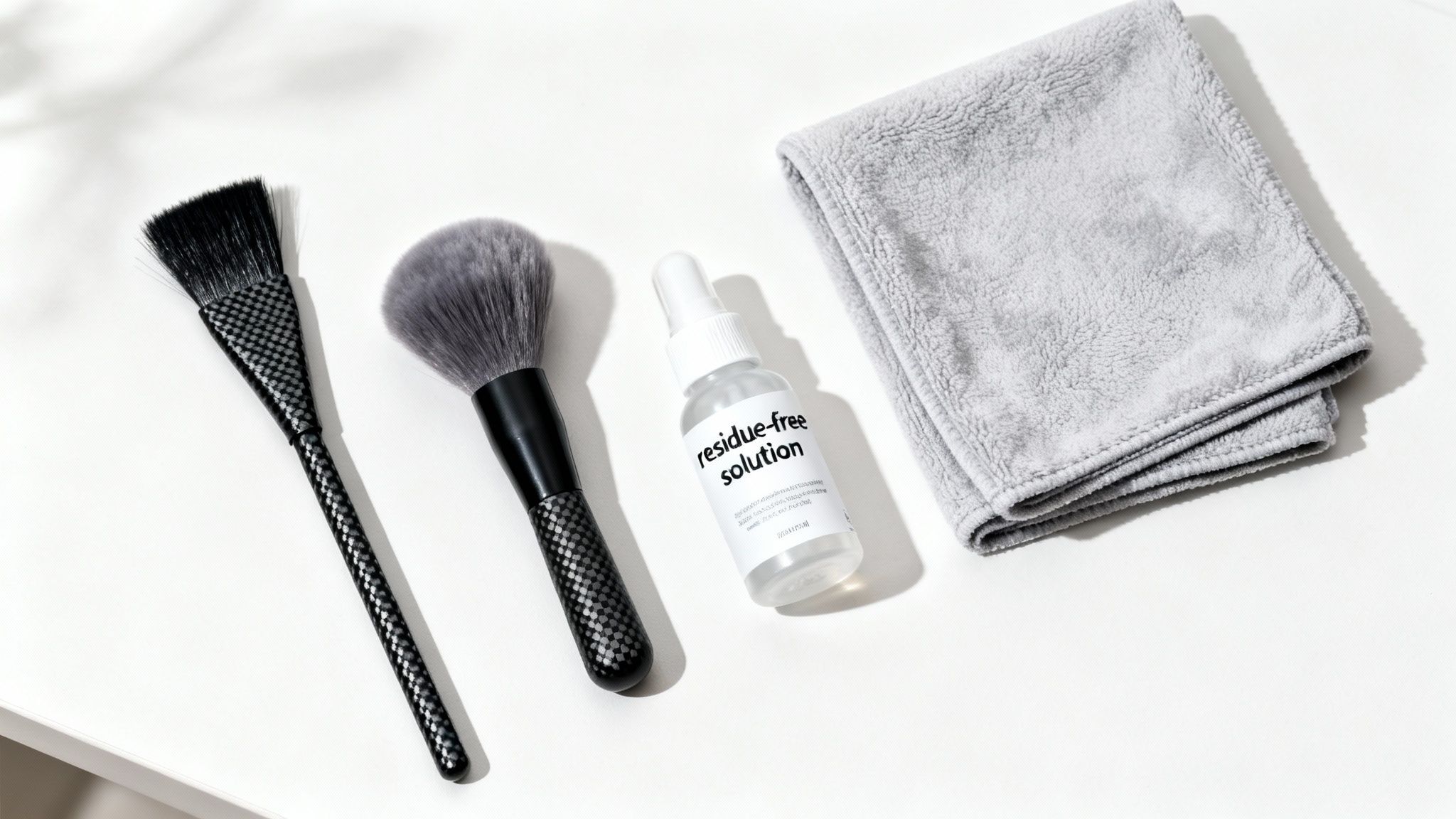
Carbon Fiber Brushes are the masters of static. Their thousands of super-fine, conductive bristles don't just sweep away dust; they actually dissipate the static charge that attracts it in the first place. This makes them perfect for a quick, dry clean before every play to keep things sounding crisp.
Velvet Brushes, on the other hand, are the champs of wet cleaning. Their soft, plush surface is designed to hold cleaning fluid and gently work it deep into the grooves, lifting out embedded gunk and finger oils that a dry brush would just skim over. The best record cleaner kit will often include both styles to handle daily dusting and those necessary deep-cleaning sessions.
The Cleaning Solution: The Magic Formula
If the brush is the heart of the kit, the solution is its lifeblood. A bad formula can do more harm than good, leaving behind a sticky film that gums up your stylus and attracts even more dust. What you want is a formula that dissolves grime effectively and then evaporates completely, leaving nothing behind.
The big debate often comes down to one ingredient: alcohol.
- Alcohol-Based Solutions: These are fantastic at cutting through stubborn grease and oils. The downside? Over time, harsh alcohols can potentially dry out the vinyl, making it brittle.
- Alcohol-Free Solutions: These are generally seen as the safer bet for long-term use. They use other gentle agents to lift dirt without the potential risks of alcohol, making them a go-to for many serious collectors.
No matter which type you choose, the most important quality is that the solution is residue-free. Any film left on the record will kill the sound quality and just become a magnet for new dust. A high-quality kit will always prioritize a clean-rinsing, non-damaging formula.
The vinyl comeback has created a huge demand for quality care products. The global market for record cleaners is now valued at over USD 121 million. Premium kits priced over $100 make up 25% of sales because their advanced systems can remove up to 99% of contaminants. As the industry shifts toward greener products, 30% of kits have already adopted biodegradable solutions. It's also worth noting that properly cleaned records often fetch 20-50% higher resale values.
Build Quality and Ease of Use
Finally, think about the overall construction and how easy the kit is to use. A kit is more than just its parts; it's a complete system that should feel durable and intuitive. Look for sturdy materials in the brushes, leak-proof bottles, and high-quality microfiber cloths that won't leave lint behind.
Ease of use is a feature in itself. A kit with clear instructions and an ergonomic brush handle makes cleaning feel like a satisfying ritual instead of a chore. This is especially true for manual kits where your technique really matters. When a kit is designed with the user in mind, you're far more likely to use it regularly—and that’s the real key to a pristine-sounding collection.
To help you decide, here’s a quick checklist to compare the different types of cleaning kits on the market.
Feature Checklist for Your Ideal Record Cleaner Kit
Use this checklist to compare essential features and find a kit that matches your performance and budget needs.
| Feature | What to Look For in a Manual Kit | What to Look For in a Vacuum Kit | What to Look For in an Ultrasonic Kit |
|---|---|---|---|
| Cleaning Method | Carbon fiber or velvet brush paired with a cleaning solution. | A vacuum wand that applies fluid and then suctions it off the record surface. | A tank that uses high-frequency sound waves in a water bath to dislodge debris. |
| Effectiveness | Great for surface dust and light grime. Effectiveness depends on user technique. | Excellent for removing deep-seated dirt and old residue from the grooves. | The most thorough clean possible, reaching microscopic particles deep in the grooves. |
| Ease of Use | Simple and quick for daily use. Requires a bit of manual effort and care. | More involved setup but a straightforward, automated cleaning process. | Set-it-and-forget-it. Place records in the machine and let it run. |
| Cost | Most affordable option, typically under $50. | Mid-to-high range, from $100 to several hundred dollars. | The most expensive option, often starting at $500 and going up from there. |
| Best For | Casual listeners and collectors who need a reliable, everyday cleaning tool. | Serious collectors with valuable records or those buying used vinyl that needs restoration. | Archival purposes and collectors who want the absolute pinnacle of cleaning performance. |
Choosing the right kit comes down to your collection size, budget, and how deep you want to go. Whether you start with a simple manual kit or invest in a high-tech machine, the goal is the same: keeping the music alive and sounding its best.
How to Clean Your Records Like a Pro
You’ve got your kit, and now it's time for one of the most satisfying parts of owning vinyl: bringing a record back to life. Proper cleaning is a ritual that pays off instantly with better sound. Mastering the technique is easier than you think—it’s less about brute force and more about finesse, making sure every groove is free from the gunk that causes those dreaded pops and crackles.
This guide will walk you through the process step-by-step using a classic manual kit, like the EVEO 4-in-1. Follow along, and you’ll be treating every record with the care it deserves in no time.
Step 1: Prepare Your Cleaning Station
Before you even think about touching the record, set yourself up for success. Cleaning vinyl in a dusty, cluttered space is self-defeating; you'll just invite new particles to settle right back on the surface.
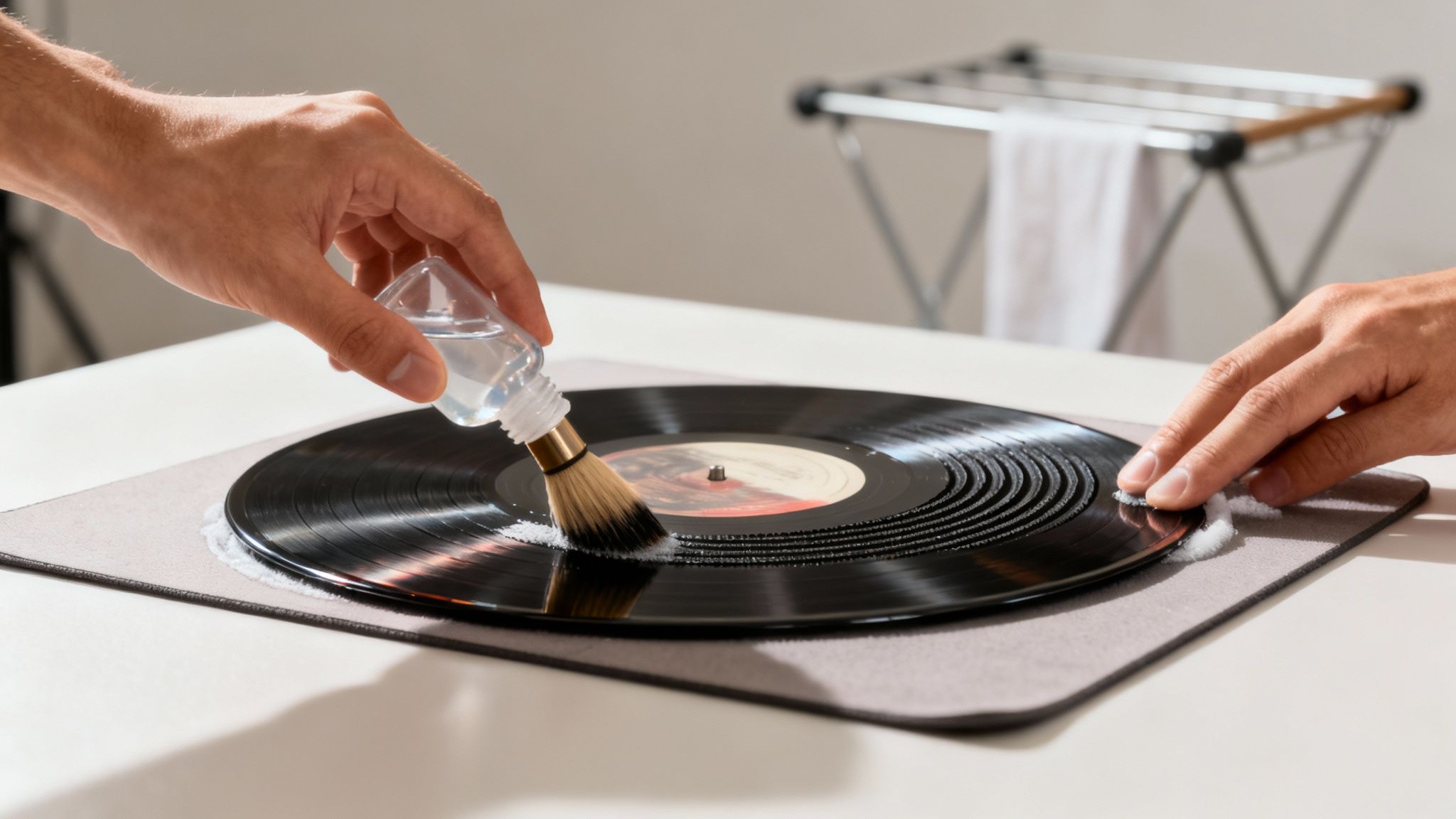
Find a clean, flat, and well-lit area. Lay down a soft, lint-free cloth or a dedicated cleaning mat to protect your vinyl from scratches. Give your hands a good wash and dry them completely to avoid transferring any oils to the record.
Step 2: Initial Inspection and Dry Brushing
Every cleaning session should start with a quick visual check. Hold the record by its edges and tilt it under a good light. This lets you spot any obvious dust, fingerprints, or problem areas that might need a little extra love.
Next up is the pre-play dry brush, where a carbon fiber brush really shines. It's simple:
- Place the record on your turntable platter to keep it stable and spinning.
- Gently hold the carbon fiber brush, letting the bristles make light contact with the record’s surface as it rotates.
- After a few rotations, slowly sweep the brush from the inner grooves toward the outer edge, lifting the dust clean off.
This quick dry-clean zaps static and whisks away loose surface dust. For a record that’s already in pretty good shape, this might be all it needs before you drop the needle.
Step 3: Applying the Cleaning Solution
For records that need a deeper clean, it’s time to bring in the liquid. This is where your specialized cleaning fluid and velvet brush get to work. The goal here is to apply the solution evenly without drenching the record label.
Give the cleaning solution a gentle shake. Lightly spray it onto the vinyl, using just enough to moisten the grooves without creating puddles. Most high-quality kits come with a fine-mist spray bottle that makes this step a breeze.
A common mistake is using way too much fluid. Remember, a little goes a long way. The liquid is there to loosen grime, not flood the record. Oversaturating the surface just makes drying a pain and puts the center label at risk.
Step 4: Mastering the Brushing Technique
With the solution on the record, grab your velvet brush. The absolute golden rule here is to always follow the grooves. Never scrub back and forth or across the record—that can push dirt deeper into the grooves or, even worse, cause micro-scratches.
Hold the velvet brush gently and place it on the vinyl. Using light, even pressure, let the brush glide along the circular path of the grooves for two or three full rotations. This motion allows the soft pad to lift the loosened grime and suspend it in the cleaning fluid, pulling it out for good.
Step 5: The Final Wipe and Drying
The last step is getting all that dirty fluid off and making sure the record is perfectly dry. Use a clean, dry microfiber cloth to gently wipe the record, again moving with the grooves. Keep folding the cloth to a fresh, clean section as you go.
After the wipe-down, let the record air dry completely for a few minutes. A dish rack or a specialized vinyl drying rack works perfectly. Once it's bone dry, slide it back into a clean inner sleeve. A totally dry record is key to preventing mold and keeping static from immediately attracting a new layer of dust. For a more detailed breakdown, check out our complete guide on how to clean vinyl records.
Keeping Your Cleaning Kit in Top Condition
Your record cleaner isn't just an accessory; it's an investment in the life of your vinyl collection. Like any precision tool, it needs a little care to keep doing its job right. If you let your cleaning tools get dirty, they stop solving the problem and start becoming the problem, dragging old grime from one record to the next.
Think of it this way: you wouldn't wash your dishes with a dirty sponge. The same idea applies here. A brush caked with dust or a cloth saturated with old cleaning fluid won't get you that perfectly silent playback you're chasing. A few simple habits will keep your kit working like new for years.
This upkeep is a core part of the vinyl ritual, just as important as cleaning the records themselves. The boom in at-home solutions like EVEO's 4‑in‑1 kit is tied directly to vinyl's massive comeback, with global sales hitting 120 million units. While the professional record cleaning service sector was valued at USD 48.4 million, DIY kits now own 70% of the market because they make pro-level care easy and affordable. This shift shows just how much collectors value hands-on maintenance. You can dig deeper into the growth of record care services on reports.valuates.com.
Caring for Your Brushes and Cloths
Your brushes and microfiber cloths are the front-line soldiers in the war on dust and static. Keeping them clean is non-negotiable if you want to avoid cross-contamination. A dirty brush just moves dirt around, defeating the whole purpose of cleaning in the first place.
After a wet cleaning session, give your velvet brush pads a quick rinse under lukewarm distilled water. Let them air dry completely before you put them away. For carbon fiber brushes, a small comb or another clean, dry brush is perfect for gently flicking trapped dust out of the bristles.
Microfiber cloths need a regular wash, too. Just follow these steps:
- Hand Wash: Use a basin of cool or lukewarm water with just a tiny drop of gentle, dye-free soap.
- Rinse Well: Rinse them several times under running water until every last bit of soap is gone.
- No Softener: Never use fabric softener. It coats the fibers and will leave a nasty residue on your vinyl.
- Air Dry: Squeeze out the extra water and hang them up to air dry.
Storing Fluids and Advanced Systems
Proper storage keeps your cleaning solution potent. Always screw the cap on tight and store the bottle in a cool, dark place away from sunlight. Big temperature swings can break down the formula over time, making it less effective.
Your cleaning kit is an ecosystem. The fluid, the brushes, the cloths—each part needs to be clean to work with the others. Maintaining the whole system is the secret to protecting both your gear and your priceless vinyl collection.
If you’re running a more advanced setup, the maintenance is just as simple. For vacuum machines, check the felt strips on the vacuum wand for wear. Once they look flattened or dirty, it’s time to replace them. For ultrasonic cleaners, make sure you change the distilled water bath often and wipe down the tank itself to stop any gunk from building up.
Our Top Recommendations for Every Type of Collector
Picking the right record cleaner kit really comes down to a personal choice. It’s all about the size of your collection, how valuable it is, and what you’re hoping to get out of your listening experience. To make it a little easier, we’ve broken down the best cleaning methods for three common types of collectors. This way, you can grab a system that’s a perfect fit for you.
The New Enthusiast
If you're just dipping your toes into the world of vinyl or have a collection that’s still growing, a manual kit is the perfect place to start. It’s effective, won’t break the bank, and teaches you the satisfying, hands-on ritual of caring for your records without a huge learning curve.
A solid all-in-one option like the EVEO 4-in-1 kit gives you everything you need to get going. It comes with a quality brush, a good cleaning solution, and a microfiber cloth to handle daily dust and static. It’s the best way to keep your new records sounding perfect from the very first spin. You can find some great record cleaning kits to start your collection that make maintenance a breeze.
The Serious Collector
Once your shelves start to get a little crowded and you find yourself digging through crates for secondhand gems, your cleaning routine needs to step up. For a bigger library, a mid-tier vacuum system is an absolute game-changer. It gives you a much deeper clean, capable of restoring those thrift-store finds and lifting out years of grime that a simple brush just can't handle.
A quick look at this flowchart shows just how simple routine kit care can be.
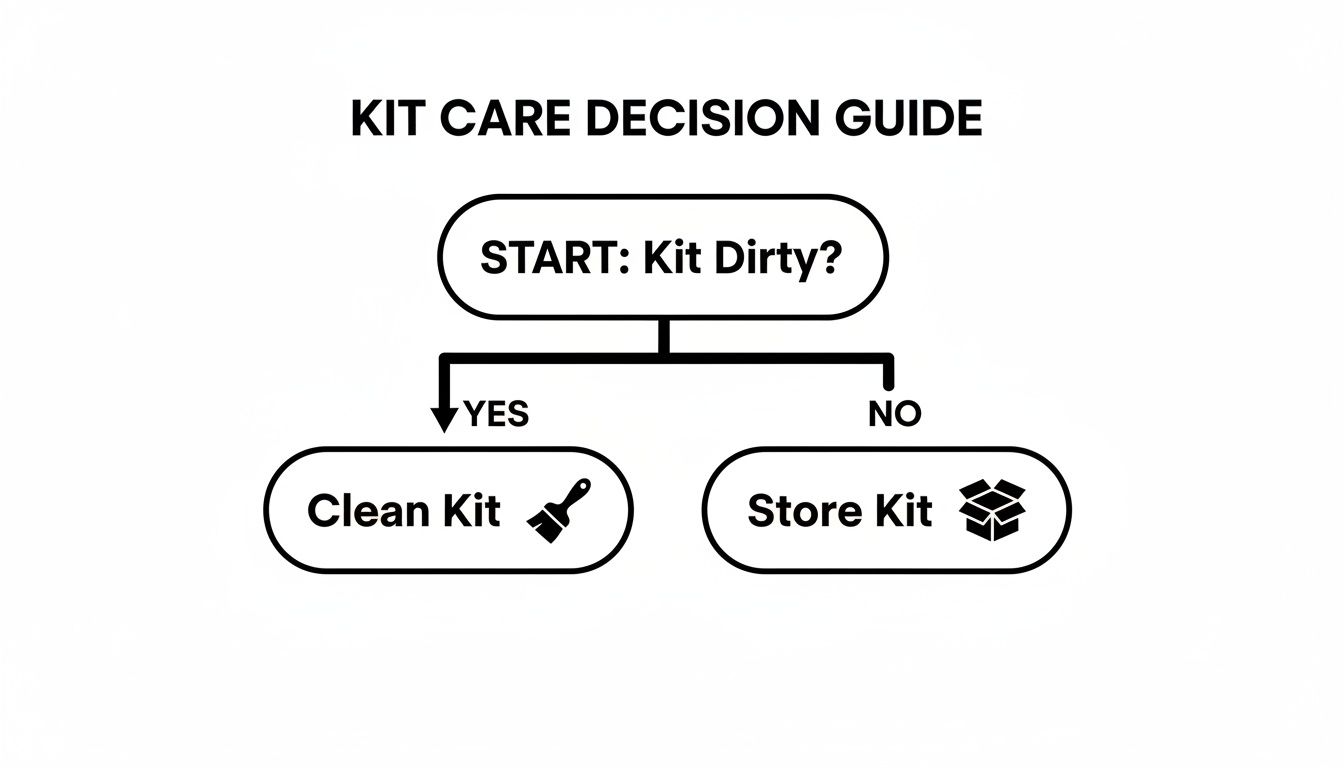
This little guide drives home a crucial habit for any collector: if you take care of your tools, they'll take care of your vinyl.
The Dedicated Audiophile
For the listener chasing that perfect, flawless sound, nothing even comes close to an ultrasonic cleaner. This is the top-shelf solution for true archival preservation. It works by creating microscopic bubbles with sound waves—a process called cavitation—to give your records a pristine, non-contact clean that gets into the absolute deepest part of the groove.
For audiophiles with rare or valuable pressings, an ultrasonic cleaner isn't just a tool; it's an investment in sonic purity. It removes contaminants that other methods can't touch, revealing a level of detail and clarity that brings you closer to the original recording.
Your Record Cleaning Questions, Answered
Even with the best kit in hand, you're bound to have questions as you get deeper into the vinyl hobby. Let's tackle some of the most common ones we hear from fellow collectors and clear up the confusion so you can get back to what matters—enjoying your music.
How Often Should I Actually Clean My Records?
This really comes down to your listening habits and where you're sourcing your vinyl. For day-to-day listening, getting into the habit of a quick pass with a carbon fiber brush before each play is a game-changer. It’s a simple, two-second step that lifts surface dust and zaps static before the stylus has a chance to grind them into the grooves.
A full-on wet clean is for the more serious jobs. You should always give any record a deep clean the first time you bring it home, whether it’s brand new from the shop or a dusty gem from a thrift store. After that, break out the solution and microfiber cloth whenever you hear those persistent clicks, pops, and crackles that a dry brush just can’t fix.
Think of it this way: the dry brush is like daily dusting, while the wet clean is the deep-scrub restoration. A little bit of regular maintenance goes a long way in preventing the need for constant heavy-duty cleaning.
Can I Just Make My Own Cleaning Solution?
We hear this one a lot, and while the DIY spirit is admirable, we strongly advise against it. It might feel like you’re saving a few bucks, but using common household chemicals on your records can cause permanent, irreversible damage.
Ingredients like isopropyl alcohol, for example, are way too aggressive. Over time, they can strip the protective lubricants from the vinyl, leaving the grooves brittle and playback noisy. Other homemade go-to's like tap water and dish soap are just as bad—they leave behind mineral deposits and a sticky film that not only attracts more dust but can also gum up your stylus. Stick with a professionally formulated, residue-free solution like the one in the best record cleaner kit you can find. It’s made to be tough on grime but gentle on your records.
Will Cleaning My Records Fix Scratches?
This is a really important distinction to make. A high-quality cleaning kit works wonders on improving sound by clearing out all the gunk—dust, skin oils, static—that causes all that unwanted surface noise. It essentially clears the runway for your stylus, letting it read the musical information in the grooves cleanly and without interruption.
But cleaning can’t perform miracles on physical damage. A scratch is a permanent scar carved into the vinyl itself, and no amount of cleaning fluid is going to fill that canyon back in. That said, a deep clean can sometimes lessen the sound of a light scratch by clearing out any debris that got stuck in it, making the "pop" less harsh. Cleaning restores a record to its absolute best possible condition, but it can't turn back the clock on physical wear and tear.
Ready to give your vinyl the care it truly deserves? The EVEO 4-in-1 Record Cleaner Kit has everything you need to get a professional-grade clean right at home. Explore the full collection and restore your sound today at eveo.store.
How to Handle Vinyl Records Without Damaging Them
A Guide to Mounting Brackets for Monitors