
Choosing the right vinyl record cleaning kit really just boils down to matching the right tools to your collection and how often you listen. For most of us, a versatile 4-in-1 kit offers the perfect sweet spot between effectiveness and convenience for daily care. Sure, serious collectors might eventually invest in more specialized systems, but a solid, comprehensive kit is the best place for anyone to start.
Why a Clean Record Is a Happy Record
A pristine vinyl record isn't just a collector's piece; it's a physical map of pure, uncompressed sound. When you drop that needle, you're not just playing a song—you're tracing sound waves etched into a delicate groove. Anything that gets in the way of that journey, from a tiny dust particle to the oil from a fingerprint, completely disrupts the experience.
This is about more than just getting rid of those annoying pops and crackles. All that gunk creates a physical barrier between your stylus and the groove walls, which leads to muffled details and distorted sound. Over time, that grime acts like sandpaper, grinding away at both your record and your expensive turntable stylus, causing permanent damage.
A quality cleaning kit is your first line of defense. It preserves the rich, warm audio that makes vinyl so special in the first place. For collectors, clean records are everything—dust and grime can degrade audio fidelity by up to 30% over time, tanking both the sound quality and the value.
Finding Your Perfect Match
Picking out a vinyl record cleaning kit doesn't have to be a headache. The key is to understand what each type does and how it fits your needs. Think of it this way: a quick daily dusting keeps things looking good, but a deep clean is what you need to bring a neglected record back to life.
Here's a quick look at the most common types of cleaning kits to help you figure out what's best for you.
Vinyl Cleaning Kit Types at a Glance
This table gives you a quick comparison of the most common types of vinyl record cleaning kits to help you identify the best fit for your needs and budget.
| Kit Type | Best For | Typical Cost | Cleaning Level |
|---|---|---|---|
| Manual Brush Kits | Quick, daily dusting before playing a record. | $15 - $30 | Light surface cleaning |
| Record Washer Systems | Deep cleaning batches of records, especially thrift store finds. | $80 - $200+ | Moderate to heavy |
| All-in-One Solutions | Comprehensive daily care and routine maintenance. | $20 - $50 | Light to moderate |
Each type has its place, but for most vinyl lovers, an all-in-one kit provides the most bang for your buck, covering all the essential bases without breaking the bank.
To simplify your choice, think about these options:
- Manual Brush Kits: These are your go-to for daily upkeep. They're perfect for a quick sweep to remove surface dust and static right before you play a record.
- Record Washer Systems: When you have a stack of records that need serious help—especially those dusty thrift store gems—a washer system is what you need for a deep, restorative clean.
- All-in-One Solutions: Kits like the popular EVEO 4-in-1 vinyl record cleaning kit bundle all the essentials—brushes, fluids, and cloths—for truly comprehensive care.
A great cleaning kit is an investment in the longevity of your collection. It protects your records, saves your stylus from premature wear, and ensures every listening session sounds exactly as the artist intended.
Ultimately, the goal is to create a simple, effective cleaning ritual. By understanding the different types of kits out there, you’re already on your way to making a smart purchase that will pay off in amazing audio quality for years to come.
Why Cleaning Vinyl Is More Than Just Dusting
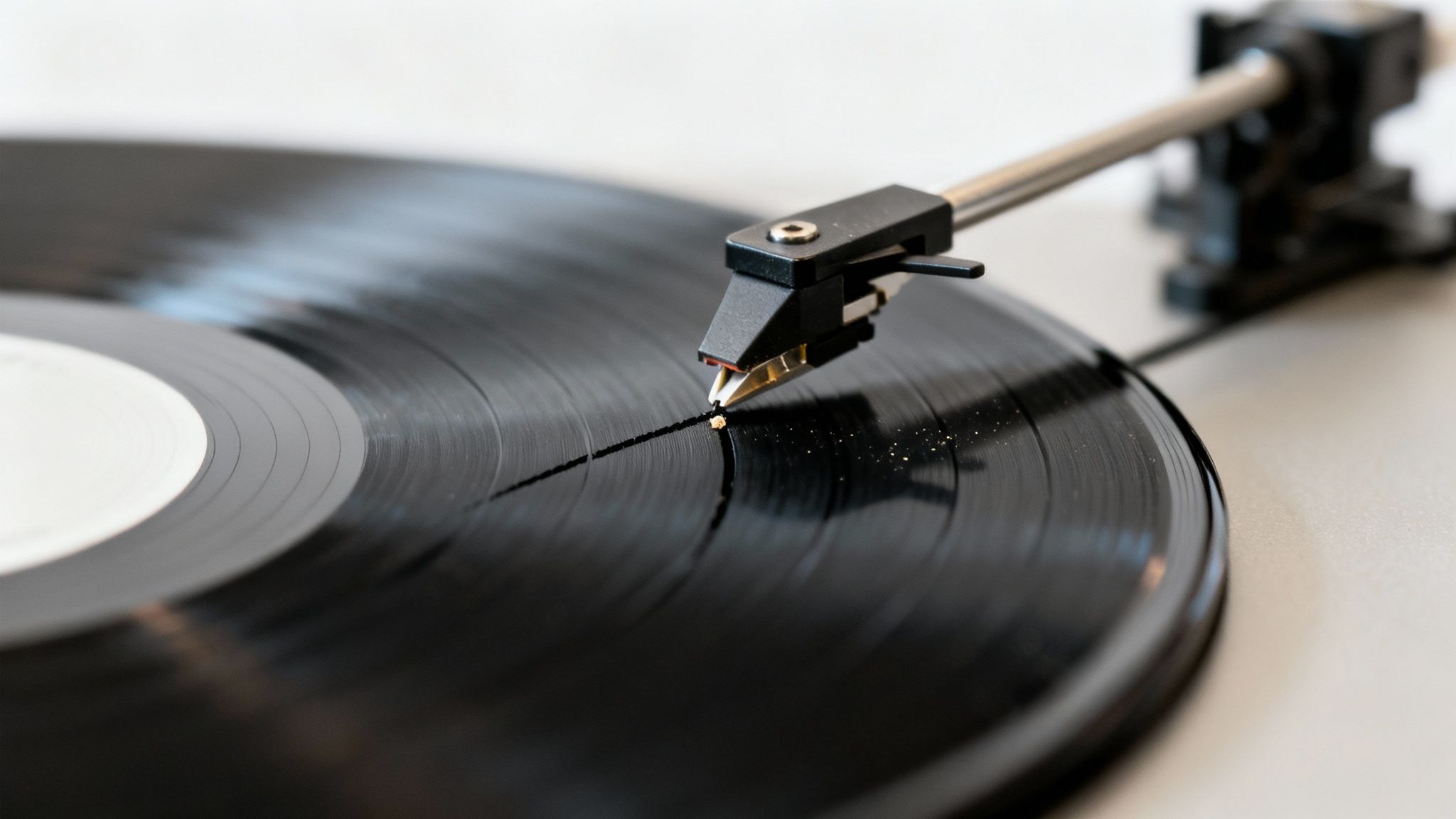
Think of your record’s groove as a tiny, intricate canyon carved with the DNA of your favorite album. Now, imagine your turntable’s stylus is a high-tech explorer, navigating every twist and turn to bring that sound to life. That delicate journey is what turns physical patterns into the warm, rich audio we all chase.
But when dust, oils from fingerprints, and static build up on the surface, they act like boulders blocking the canyon path. This junk doesn’t just cause the pops, hisses, and skips we all dread; it does real, physical harm. The stylus smacks into this debris, distorting the sound and muffling the music.
The Hidden Damage of a Dirty Record
The problem runs deeper than just a bit of noise. Every time your stylus hits a piece of dirt, it grinds that particle right into the delicate vinyl walls of the groove. It’s like taking sandpaper to the music itself, permanently wearing down the very information that creates the sound. Over time, this leads to a permanent loss of fidelity.
This constant friction also destroys your stylus. A clean needle gliding through a clean groove has a long, happy life. But forcing it through a minefield of dust and grime is a surefire way to wear it out fast. A damaged stylus not only sounds terrible but can start carving up your entire record collection.
A proper cleaning routine isn't just about making a record sound good for one listen. It's about preserving the physical integrity of your collection and extending the life of your expensive audio gear.
Understanding this is about more than just dusting; it’s about protecting valuable collections for the long haul, a mindset that applies whether you're into rare vinyl or vintage trading cards.
Preserving the Analog Experience
The magic of vinyl is hearing an album just as the artist intended—the warmth, the depth, the real connection to the music. A dirty record breaks that connection, throwing a layer of noise over a recording that was never meant to be there.
Investing in the best vinyl record cleaning kit is how you safeguard that unique analog experience. It’s a small price to pay for preservation, making sure your records sound incredible for years to come.
A good cleaning kit does several critical jobs all at once:
- Lifts Debris: It pulls out the physical grit (dust, hair, tiny particles) that causes pops and skips.
- Dissolves Oils: It breaks down the sticky residue from fingerprints that acts like a magnet for more dust.
- Eliminates Static: It neutralizes the static charge that turns your records into dust magnets in the first place.
- Protects Your Gear: It minimizes wear and tear on both your records and your stylus.
Ultimately, keeping your records clean is the most important maintenance you can do as a collector. It makes every spin a tribute to the music, not a fight against grime. The right tools make it simple, satisfying, and let the true sound of your collection shine through.
Exploring Different Types of Vinyl Cleaning Kits
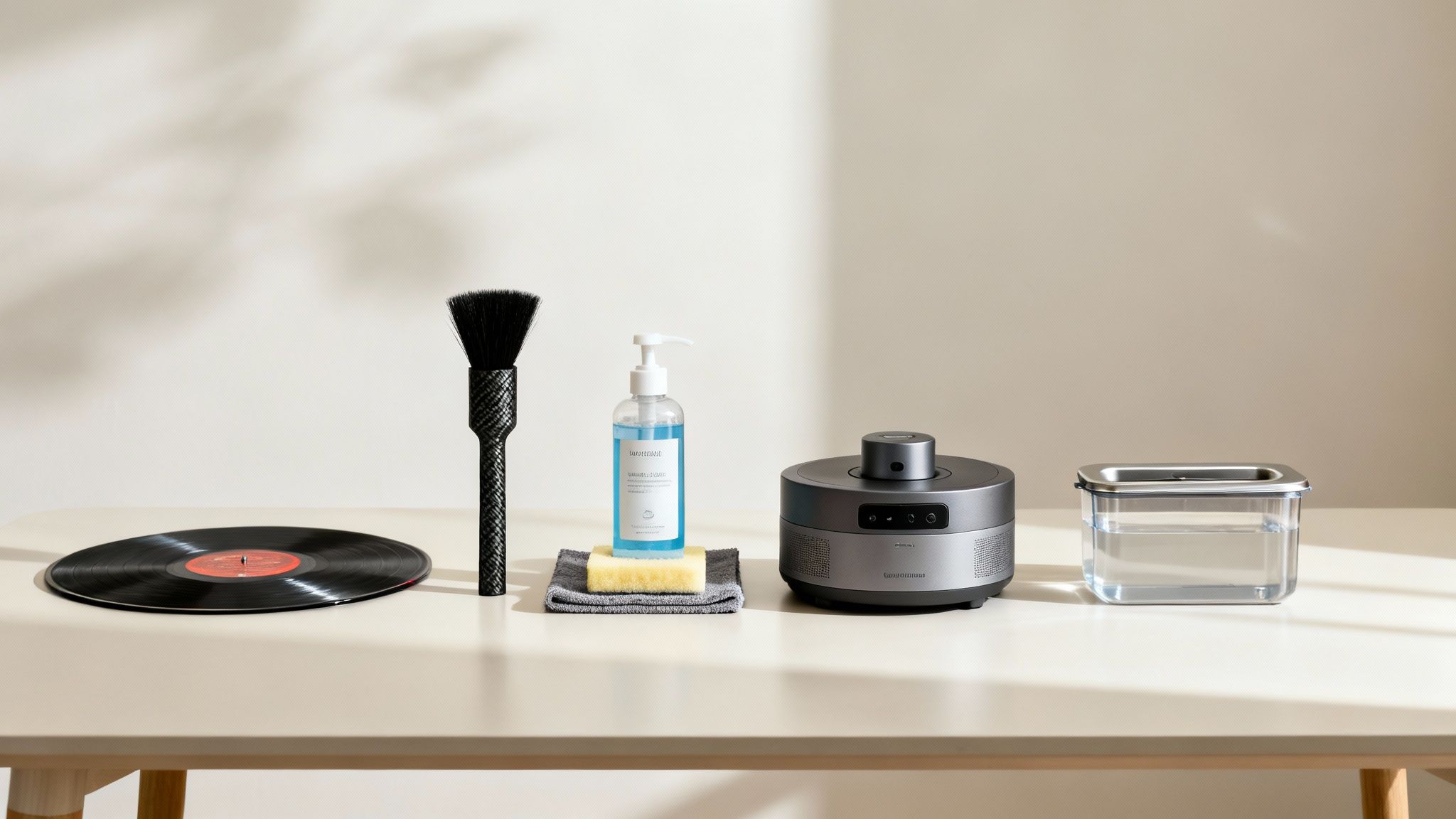
Choosing the right vinyl cleaning kit isn't about finding one "best" option. It’s about understanding which tool is right for the job. Not all kits are created equal, and each type has a specific role in a collector’s arsenal. You wouldn't use a sledgehammer to hang a picture frame, right? Same idea here.
The good news is that we're spoiled for choice. As vinyl collecting has exploded, so has the market for cleaning gear. Valued at $450 million in 2025, the industry is expected to hit $710 million by 2033, fueled by record sales that reached a massive $2,254.2 million in 2024. You can dig into more of these industry trends in this detailed market analysis.
All this growth means better and more varied options for you. Let’s break down the main categories to help you find the perfect match for your collection.
Manual Brush Kits: The Daily Duster
The simplest and most essential tool is the manual brush kit, usually featuring a carbon fiber or velvet brush. Think of this as the daily duster for your vinyl. Its main job is to lift surface-level dust and, just as importantly, kill the static electricity that turns your records into dust magnets in the first place.
- Best For: Quick, pre-play maintenance to get rid of light dust and static.
- Effectiveness: Fantastic for surface cleaning but won’t touch deep-seated grime or fingerprints.
A gentle sweep with a carbon fiber brush before you drop the needle is one of the best habits any vinyl lover can build. It’s a low-effort move with a huge payoff, drastically reducing the gunk your stylus has to plow through.
Record Washer Systems: The Deep-Cleaning Car Wash
When you haul home a stack of dusty LPs from a thrift store or a crate-digging adventure, a simple brush just won't cut it. This is where record washer systems step in. These manual "baths" let you submerge and scrub records in a cleaning solution, basically giving them a deep-cleaning car wash.
These systems use soft brushes inside a basin filled with a special fluid. You spin the record through the brushes by hand, scrubbing both sides at once to lift years of dirt out of the grooves. It’s an incredibly satisfying way to bring neglected records back to life.
For anyone who buys used vinyl on the regular, a record washer system is a total game-changer. It’s what separates a noisy, crackly record from a clean, vibrant listening experience.
Vacuum and Ultrasonic Cleaners: The Professional Grade Solutions
For the serious archivist or the audiophile with a massive, valuable collection, vacuum and ultrasonic cleaners are the top of the mountain for vinyl care.
-
Record Vacuum Systems: These machines apply a cleaning fluid and then use a powerful vacuum to literally suck the liquid—and all the dirt it loosened—straight out of the grooves. This method ensures zero residue is left behind, leaving a perfectly clean and dry surface. It's efficient and incredibly thorough.
-
Ultrasonic Cleaners: This is the surgical approach. Ultrasonic cleaners use high-frequency sound waves to create microscopic bubbles in a tank of distilled water. These bubbles implode against the record, blasting away contaminants from the deepest part of the groove without ever making physical contact. It's the ultimate in non-abrasive, deep cleaning.
While these systems offer unmatched performance, their high price tags make them a serious investment reserved for the most dedicated collectors.
All-in-One Kits: The Practical Swiss Army Knife
For most of us, an all-in-one kit hits that perfect sweet spot between daily maintenance and effective cleaning. These kits, like EVEO's 4-in-1 solution, bundle all the essential tools into one convenient package. They typically include a velvet brush, cleaning solution, a stylus brush, and a storage pouch.
Think of it as the Swiss Army knife of vinyl care. It gives you everything you need for routine dusting, tackling fingerprints, and keeping your stylus in pristine condition. This versatility makes it the perfect starting point for new collectors and a reliable workhorse for veterans, making it a top contender for the best vinyl record cleaning kit for everyday use.
What to Look for Before You Buy a Cleaning Kit
Choosing the right vinyl record cleaning kit can feel overwhelming, but it doesn't have to be. With so many options out there, the secret is to ignore the flashy marketing and focus on what actually works: the core components that deliver a deep, safe clean. Once you understand what makes each part effective, you’ll be able to pick a kit that genuinely protects your collection.
After all, proper care is everything when it comes to the life of your records. Industry experts find that neglected vinyl can lose up to 50% of its playback life just from damage caused by dirt and grime. With the 26-35 age group driving the vinyl revival and the 18-25 crowd jumping in thanks to social media, more people are investing in their collections than ever. You can learn more about vinyl market trends to see just how big this comeback is. This boom makes finding the right tools more important than ever.
Let's break down the essential features you need to look at, so you can confidently grab a kit that will keep your music sounding incredible for years.
The Anatomy of a Great Brush
Think of the brush as your first line of defense against dust and static, but remember—not all brushes are created equal. Different materials are designed for specific jobs, and knowing the difference is key to cleaning your records without causing damage. It’s like using a broom for sweeping and a mop for scrubbing; you need the right tool for the task at hand.
- Carbon Fiber Brushes: These are the static slayers. Their ultra-fine, conductive bristles get deep into the grooves to lift dust while neutralizing the static charge that attracts it in the first place. A quality carbon fiber brush is non-negotiable for a quick pre-play dusting.
- Velvet Brushes: While carbon fiber handles static, velvet pads are the masters of grabbing debris. The soft, dense material gently traps and removes bigger particles, oils, and fingerprints that a carbon fiber brush might just push around. The best kits often pair a velvet pad with a cleaning solution for a more thorough wet clean.
When you’re looking at a brush, feel the materials. The carbon fiber bristles should be dense and soft, not sparse and stiff. A velvet pad should feel plush and be stuck firmly to its handle, so you know it won’t shed fibers all over your records.
A great brush doesn't just move dust around; it lifts and removes it from the playing surface. This simple action is one of the most effective ways to reduce pops and crackles during playback.
Decoding the Cleaning Solution
The cleaning fluid is arguably the most critical part of any kit. The wrong formula can cause permanent damage, so you need to know what you're putting on your records. The goal is simple: dissolve grime without harming the delicate vinyl. Your best friend here is the ingredients list.
The absolute number one rule? Always choose an alcohol-free solution. Isopropyl alcohol, which is common in many household cleaners, is a vinyl killer. It can strip away the protective outer layer of a record, leading to groove degradation and a brittle, noisy surface over time. Once that damage is done, there’s no going back.
A safe and effective solution should be:
- Alcohol-Free: This protects the integrity of the vinyl for long-term preservation.
- Anti-Static: Helps prevent dust from immediately clinging back onto the clean surface.
- Residue-Free: It shouldn't leave anything behind in the grooves that could muffle the sound or gunk up your stylus.
A well-made cleaning fluid is the heart of any kit designed for a deep clean. For a more detailed breakdown, check out our guide on what makes a safe and effective vinyl record cleaning fluid.
The Importance of High-Quality Accessories
Finally, don’t overlook the supporting cast. The little accessories play a huge role in getting a scratch-free finish. A cheap, low-quality cloth can undo all your hard work by leaving behind more lint than it removes.
Look for a kit that includes a high-quality microfiber cloth. This material is engineered to be super absorbent and lint-free, making it perfect for drying a record after a wet clean without leaving new dust behind. The weave should be tight and soft to the touch, ensuring it won’t cause micro-scratches on the delicate vinyl surface.
The same goes for other tools. If a kit includes a stylus brush, its bristles should be short and densely packed to gently clean your needle without bending the fragile cantilever. Every piece matters.
How to Clean Your Records Safely and Effectively
Having a great kit is one thing, but knowing how to use it is where the real magic happens. A proper cleaning isn't a chore; it's a simple, satisfying ritual that brings your records back to life. This guide will walk you through using a typical all-in-one kit to get that perfect, noise-free clean every single time.
Think of it like detailing a classic car. You wouldn't just blast it with a hose and call it a day. You have to prep the surface, apply the cleaner correctly, and dry it without leaving streaks or scratches. Your records absolutely deserve that same level of care.
Prepare Your Cleaning Station
First things first: set up a safe, clean, and static-free workspace. Lay a soft, lint-free microfiber cloth on a flat, stable surface. This simple step prevents accidental scuffs and gives you a dedicated area to work in.
Make sure the room is well-lit so you can easily spot any dust or fingerprints on the record’s surface. Finally, give your hands a good wash to avoid transferring any new oils onto the vinyl you’re about to clean.
The Step-by-Step Cleaning Process
With your station ready, it’s time to get down to business. Follow these steps carefully to lift dirt from the grooves without causing any damage. The key is a gentle touch and methodical, deliberate movements.
-
Dry Brush First: Place the record on your protected surface. Gently hold a carbon fiber or velvet brush over the record, letting the bristles just kiss the surface. If it's on a turntable, let it spin; otherwise, rotate it by hand. Let the brush lightly follow the grooves from the inside out to pick up any loose dust.
-
Apply the Cleaning Solution: Lightly mist the record’s surface with your alcohol-free cleaning fluid. Two or three sprays are usually plenty—you do not want to soak the record. Be extra careful to avoid spraying the center label, as moisture can make it peel or stain.
-
Wipe with the Grooves: Take your velvet cleaning brush and place it flat on the record. Apply very light, even pressure and slowly wipe in a circular motion, always following the direction of the grooves. Never scrub back and forth or go against the grain, as this can grind dirt deeper into the vinyl and cause permanent damage.
This visual guide breaks down the essential tools you’ll find in a standard cleaning kit.
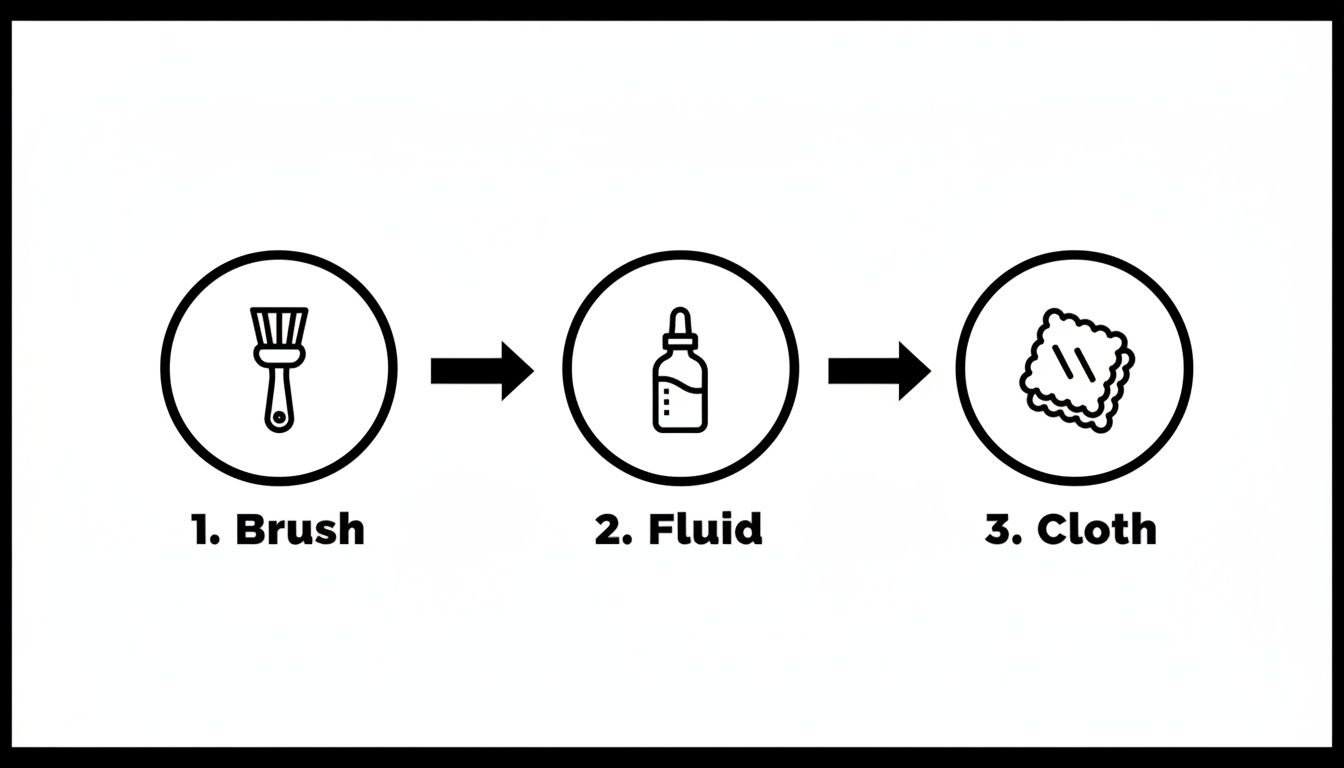
The flow here—from a gentle brush to a targeted fluid and a final wipe—shows how each component works together for a complete, thorough clean.
- Dry Thoroughly: Using a separate, clean microfiber cloth, gently blot or wipe the record dry. Again, always follow the direction of the grooves. The goal is to absorb all the leftover moisture without leaving a trace of lint behind. A properly dried record is your best defense against static buildup.
For a deeper dive into different cleaning techniques, you can also learn more about how to clean vinyl records in our detailed guide.
Maintaining Your Cleaning Tools
Your kit is only as good as the tools inside it, so keeping them clean is non-negotiable. Use a small comb or another brush to clear dust and debris from your velvet pad. Microfiber cloths can be hand-washed with a gentle detergent and then air-dried to keep them absorbent and lint-free.
Proper maintenance ensures your cleaning kit remains a reliable partner in preserving your collection. It’s the secret to guaranteeing a flawless listening experience for years to come.
Common Questions About Vinyl Record Care
Even with the best kit on hand, questions are bound to pop up. Building a great vinyl maintenance routine is all about understanding the why behind each step, so you can clean with confidence.
We’ve rounded up the most common questions from new and seasoned collectors alike. Think of these as the final pieces of the puzzle, helping you build great habits and sidestep those all-too-common (and costly) mistakes.
How Often Should I Clean My Records?
This really depends on how often a record hits your turntable. The single best habit you can get into is giving your vinyl a quick, gentle dry brush before every single play. A good carbon fiber brush nabs any surface dust that’s settled since last time and helps keep static at bay.
When it comes to a deeper, wet clean, the approach is a little different:
- For New and Used Records: Give them a wet clean the moment you get them home. This clears away manufacturing residue on brand-new pressings and washes off years of accumulated grime from second-hand finds.
- For Your Regular Rotation: If you have go-to albums you spin frequently, a deep clean every few months is a perfect way to keep them sounding pristine.
- When You Hear It: If you notice any new pops, crackles, or can actually see dust or smudges in the grooves, don't wait. It’s time for a wet clean.
Can I Use Household Cleaners or Tap Water?
This is one of the biggest mistakes you can make. It's an absolute no. Using household cleaners, particularly anything with isopropyl alcohol, is a fast track to permanently ruining your records. These chemicals are far too harsh and can strip the protective coating right off the vinyl, leading to irreversible groove damage.
Tap water is just as bad for a different reason. It’s packed with minerals and tiny impurities. When the water evaporates, all that gunk gets left behind as a sound-killing residue deep inside the grooves. Stick to a specially formulated, alcohol-free cleaning fluid, and if you need to rinse, use distilled water only.
The vinyl record market is booming, projected to rocket from $1,631.29 million in 2026 to an astonishing $5,111.25 million by 2035. With so many people investing in physical media, proper care is more crucial than ever. You can dive into the numbers with these detailed market research findings.
Is Cleaning the Turntable Stylus Important?
Yes—it’s absolutely critical. A dirty stylus can’t read the grooves properly, which results in muffled, distorted audio. Worse yet, it acts like a tiny, destructive chisel, grinding any trapped dirt and dust directly into your record’s grooves.
That’s why any good vinyl record cleaning kit will include a dedicated stylus brush. A good rule of thumb is to clean your stylus after every 15-20 hours of playback. Just remember to always brush gently from back to front, in the same direction the record spins, to protect the delicate cantilever. A clean stylus means clear sound and a longer life for your entire collection.
Ready to give your collection the care it deserves? The EVEO 4-in-1 Vinyl Record Cleaner Kit provides everything you need to keep your records sounding their best. Explore the complete kit and start your perfect cleaning ritual today at EVEO.store.
A Guide to Using a Phono Stylus Cleaner for Perfect Sound
Finding the Best Record Cleaning Brush for Your Vinyl