

When someone talks about the "best" record cleaning solution, it's easy to think they're just talking about the liquid in the bottle. But that’s only part of the story. The truth is, the best solution is actually a complete system. It’s the right combination of a safe, alcohol-free cleaning fluid and the proper tools for the job—like a good carbon fiber brush and a dedicated microfiber cloth—all working together to lift away grime without hurting the vinyl itself.
What Makes a Record Cleaning Solution the Best?
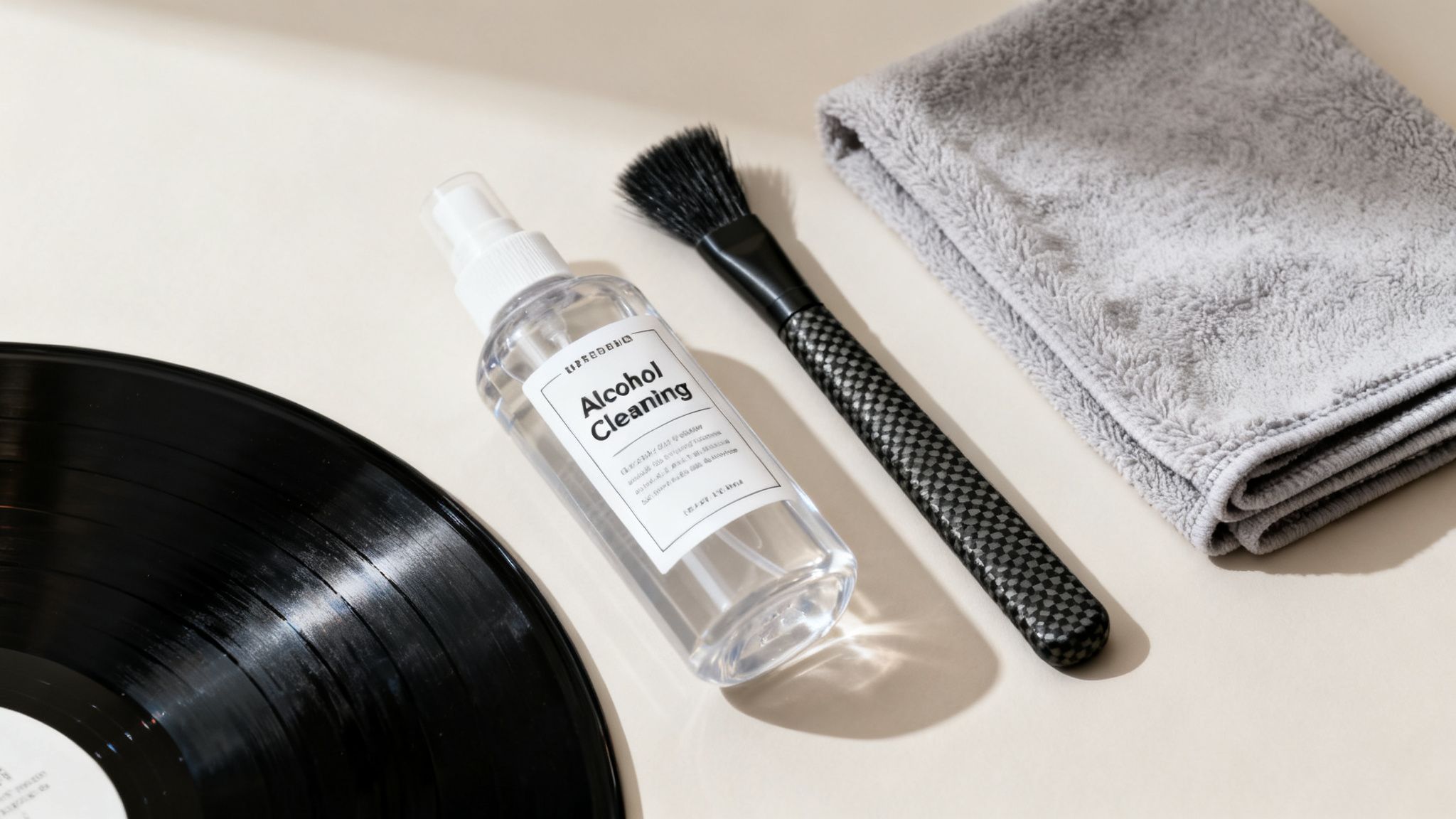
Searching for the single best cleaner is like trying to build a house with only a hammer. You need a full toolkit. A truly effective cleaning system is a team effort where each component has a specific, crucial role. Together, they lift dust out of the grooves, get rid of static that attracts more dust, and wipe away oily fingerprints, all while keeping the delicate vinyl surface safe.
With vinyl making such a huge comeback, the demand for quality gear to take care of our collections has exploded. We're not just talking a small trend here; the global market for vinyl records is expected to climb toward a massive $1.29 billion by 2033. Even the market for cleaning kits hit $272.8 million in just one year. This isn't surprising—collectors know that incredible sound only comes from a well-maintained record. You can dig deeper into the vinyl market's impressive growth on Tovatech.com.
The Core Components of a Superior Cleaning System
So, what does this ideal toolkit look like? A great setup is more than just a collection of random items. Each piece is chosen to tackle a different part of the cleaning process, ensuring you get a deep, safe clean every single time.
To really get a clear picture of how these elements work together, let's break them down. The table below outlines the essential components of a top-tier cleaning system and explains why each one is so important for keeping your records sounding their best.
Components of an Effective Record Cleaning System
| Component | Purpose | Why It Matters for Your Vinyl |
|---|---|---|
| Alcohol-Free Cleaning Fluid | Safely dissolves and lifts grime, oils, and residue from the grooves. | Alcohol can dry out the vinyl over time, making it brittle and prone to damage. An alcohol-free formula cleans effectively without causing long-term harm. |
| Carbon Fiber Brush | Removes loose dust and neutralizes static electricity before a wet clean. | Static is a huge magnet for dust. This brush gets deep into the grooves to dislodge particles and stops them from being immediately attracted back to the surface. |
| Lint-Free Microfiber Cloth | Gently wipes away the cleaning fluid and suspended dirt without scratching. | Ordinary cloths or paper towels can leave behind tiny fibers (lint) and create micro-scratches. A quality microfiber cloth traps debris and absorbs moisture safely. |
Ultimately, a complete kit provides a holistic solution. It takes the guesswork out of the equation because you know every tool is designed to work in harmony. This teamwork is what delivers consistent, professional-level results and protects your valuable record collection.
A Practical Example: The EVEO 4-in-1 Kit
To see these principles in action, you don't have to look far. The EVEO 4-in-1 Record Cleaning Kit is a perfect real-world example of this system-based approach. It bundles all the essentials into one straightforward package: an alcohol-free cleaning spray, an anti-static carbon fiber brush, and a soft microfiber cloth. It’s got everything you need for both quick daily touch-ups and more thorough deep cleans.
Once you start thinking in terms of a complete system, it becomes much easier to judge whether a product is right for you. It’s not just about what’s in the bottle—it’s about how all the tools work in concert to bring your records back to life, giving you that warm, rich, and crackle-free sound every collector is chasing.
What’s Actually Inside Your Record Cleaning Fluid?
When you grab a bottle of record cleaning fluid, it's tempting to think they're all basically the same. Just some kind of magic soap, right? But the truth is, the ingredients inside are what make the difference between a safe, deep clean and a treatment that could slowly damage your collection. Knowing what's on the label helps you choose a solution that will actually preserve your records for the long haul.
Think of it like this: you wouldn't use a harsh kitchen degreaser on a priceless antique wooden table. The same logic applies to your vinyl. A good cleaning fluid needs to be a gentle but powerful agent, designed specifically to lift gunk out of the grooves so you can wipe it away for good.
The Great Debate: Alcohol vs. Alcohol-Free
For decades, isopropyl alcohol (IPA) has been a staple in many record cleaning fluids. It’s a fantastic solvent, which means it’s great at dissolving greasy fingerprints and other oily residues. But that strength can also be its biggest weakness.
Imagine using a harsh, stripping soap on your hands every single day. Sure, they'd be clean, but you'd also be stripping away the natural oils, leaving your skin dry and cracked. In a surprisingly similar way, high concentrations of alcohol can slowly leach the plasticizers out of the PVC that your records are made of. Those plasticizers are what keep the vinyl flexible and resilient.
Over time, this leaching process can make the vinyl brittle and far more susceptible to cracking and damage. While a tiny, well-balanced amount of alcohol might not spell disaster, an alcohol-free formula is always the safest bet, especially for your most valuable or vintage LPs.
This is why advanced formulas, like the one in the EVEO kit, are engineered to clean just as powerfully without that risk. They rely on other ingredients to get the job done, acting more like a pH-balanced cleanser that respects the integrity of the material it’s designed to clean.
Surfactants and Enzymes: The Modern Cleaning Crew
So, if the best modern fluids are ditching the alcohol, what are they using instead? The secret often lies with two unsung heroes of the cleaning world: surfactants and enzymes.
- Surfactants: This sounds like a complex scientific term, but the concept is simple. A surfactant is a compound that makes water "wetter" by reducing its surface tension. Think about how a single drop of dish soap helps cut through grease on a dinner plate. Surfactants in record cleaners do the same thing, allowing the fluid to get deep into those microscopic grooves to surround dirt particles and lift them right out.
- Enzymes: Some of the best premium formulas take it a step further by including enzymes. These are biological compounds that act like little Pac-Men, targeting and breaking down specific types of organic grime. They can tackle things like stubborn mold release agents left over from the pressing plant or organic gunk that a simple solvent would just smear around.
This one-two punch allows a solution to be tough on dirt but incredibly gentle on the vinyl itself. It’s a much more targeted approach, removing only what you want gone while leaving the record material completely unharmed.
The Hidden Dangers of DIY Cleaning Solutions
We’ve all been there—the temptation to mix your own cleaning fluid is real. A quick search online turns up dozens of recipes, usually involving some combination of distilled water, a few drops of dish soap, and maybe a splash of rubbing alcohol. It seems like a great way to save a few bucks, but it’s a massive gamble for your record collection.
The biggest issue with any DIY formula is a lack of precision. Professionally manufactured solutions are created in controlled lab environments to ensure every ratio is perfect and that zero impurities make it into the bottle. If you use just a little too much soap, for example, you’ll leave a sticky film behind in the grooves. You might have wiped away the dust, but you’ve just replaced it with a residue that will attract even more dirt and cause audible noise on playback.
Even getting the right ingredients in the wrong proportions can cause problems. It’s a science, and getting the balance just right is key. For a closer look at the risks, you can learn more about homemade record cleaning solutions and see why a professional formula is almost always the safer bet. A product like EVEO’s is specifically designed to be residue-free, ensuring that the only thing left behind is pristine vinyl and pure, unadulterated sound.
Comparing Manual Kits and Automated Machines
When you're ready to get serious about cleaning your records, you’ll find yourself at a fork in the road. One path leads to the hands-on approach of a manual cleaning kit; the other, to the high-tech power of an automated machine. This isn't just about how much you want to spend. It’s about the kind of experience you're after, the size of your collection, and what you truly value in the cleaning ritual.
Think of it like washing a car. A manual kit is the classic hand wash. You're in total control, carefully applying the solution, feeling the contours, and gently wiping away every speck of grime. It’s an intimate process that connects you more deeply to your music.
On the other hand, an automated machine—whether it’s a vacuum or ultrasonic model—is the high-end, drive-through detailer. It's incredibly fast, powerful, and efficient. But it comes with a much steeper price tag and a far more detached, hands-off experience.
The Hands-On Ritual of Manual Cleaning Kits
For the vast majority of vinyl lovers, a manual kit like the EVEO 4-in-1 is the perfect place to start. These kits are affordable, a breeze to use, and put you squarely in charge of the entire cleaning process. You decide how much pressure to use and can zero in on stubborn spots, guaranteeing a clean that's both thorough and gentle.
This hands-on method is a fantastic fit for a few types of collectors:
- The New Collector: Just starting your vinyl journey? A manual kit gives you everything you need to build good habits without a big financial plunge.
- The Casual Listener: If you have a small-to-medium-sized collection that you spin occasionally, a manual kit is more than enough to keep it in top shape.
- The Detail-Oriented Enthusiast: Many audiophiles simply love the tactile process of caring for their records. For them, it’s a relaxing and essential part of the listening ritual.
A quality manual kit empowers you to achieve professional-level results through care and attention to detail. It’s a testament to the idea that sometimes, the most effective tool is the one guided by a careful hand.
Because you’re physically involved, you get to see the results of your work in real-time as dust and smudges vanish. This direct feedback is not only rewarding but helps you build a deeper understanding of how to care for your collection. You can learn more by exploring our detailed guide on finding the best vinyl record cleaning kit for your specific needs.
The Power and Precision of Automated Machines
At the other end of the spectrum, you’ll find automated record cleaning machines. These are serious pieces of hardware built for maximum cleaning power and efficiency, and they generally come in two flavors: vacuum and ultrasonic.
- Vacuum Machines: These devices work by spreading a cleaning fluid over the record and then using a powerful, slot-like vacuum to suck the liquid—and all the dirt it has dislodged—right off the vinyl surface. They're incredibly effective at lifting deep-seated gunk out of the grooves.
- Ultrasonic Machines: This is the pinnacle of record cleaning tech. These machines use high-frequency sound waves to create microscopic bubbles in a water bath, a process called cavitation. These bubbles implode against the vinyl, literally blasting contaminants out from the bottom of the grooves without any physical contact.
These machines are undeniably impressive. In fact, ultrasonic cleaners can be up to 90% more efficient at removing dust than manual methods. This incredible performance has fueled a growing market for high-end record cleaning machines, which was valued at $134.96 million and is projected to hit $218.72 million by 2033. You can read more about these market trends and the technology behind them.
However, that level of performance comes with a hefty price tag, often running into hundreds or even thousands of dollars. They’re best suited for archivists, record store owners, or die-hard collectors with thousands of LPs where cleaning by hand would be completely impractical.
For the 60% of collectors who prefer to clean their records personally, a well-designed kit like EVEO’s offers the perfect balance, delivering fantastic results in a portable and affordable package.
Manual Cleaning Kits vs Automated Machines
This side-by-side comparison should help you choose the cleaning method that best suits your needs, budget, and collection size.
| Feature | Manual Kit (e.g., EVEO 4-in-1) | Automated Machine (Vacuum/Ultrasonic) |
|---|---|---|
| Cost | Very affordable, typically under $50 | Expensive, ranging from several hundred to thousands of dollars |
| Control | Full hands-on control over pressure and specific areas | Automated process; less direct control |
| Best For | New collectors, small-to-medium collections, budget-conscious | Large collections, archivists, record stores, serious audiophiles |
| Cleaning Process | A tactile, engaging ritual that many find satisfying | A fast, efficient, but hands-off and detached process |
| Portability & Storage | Compact and easy to store | Bulky, requires dedicated space |
| Learning Curve | Minimal; very easy to learn and use | Can have a steeper learning curve, requires setup and maintenance |
| Effectiveness | Excellent for surface dust, fingerprints, and general grime | Unmatched for deep-groove cleaning and restoring very dirty records |
Ultimately, both paths lead to the same destination: cleaner, better-sounding records. While automated machines offer incredible power for those who need it, a great manual kit provides the perfect blend of control, affordability, and effectiveness for the majority of vinyl enthusiasts.
A Step-By-Step Guide to Cleaning Your Records
Alright, so you know what goes into a good cleaning fluid and why a hands-on kit is often the best way to go. But knowing the theory is one thing; putting it into practice is where the real magic happens. This is the part where cleaning stops being a chore and turns into a satisfying ritual. Getting your hands dirty (so to speak) is the single best way to bring back that original warmth and clarity your vinyl is supposed to have.
Let's walk through it using a solid all-in-one system like the EVEO 4-in-1 kit as our example. I'll break the process down into simple, repeatable steps. The idea is to get you comfortable enough to clean any record correctly, every single time, without a second thought. You’re not just wiping off dust—you're actively preserving your collection for years to come.
Preparing Your Cleaning Station
Before a drop of fluid touches your vinyl, you need to set up your workspace. Think of it like a surgeon prepping an operating table. A clean, stable environment is non-negotiable if you want good results and, more importantly, if you want to avoid accidents.
Find a flat, well-lit surface and lay down a soft, lint-free cloth or a proper cleaning mat. This gives the side of the record you aren't working on a safe place to rest, free from scratches or stray grit. And it should go without saying, but make sure your own hands are clean and dry. You don't want to transfer any oils from your skin onto the record.
Get your tools ready and within arm's reach:
- Your Record: Remember, handle it by the edges and the label only.
- Cleaning Fluid: Give the sprayer a quick test pump to make sure it’s working.
- Carbon Fiber Brush: Have it clean and ready for its first pass.
- Microfiber Cloth: Grab a fresh, clean one that you only use for records.
Taking a minute to get organized like this makes the whole process smoother and honestly, more enjoyable.
This simple flowchart breaks down the entire process into its three core stages: prepping the surface, the deep clean itself, and getting the vinyl perfectly dry.
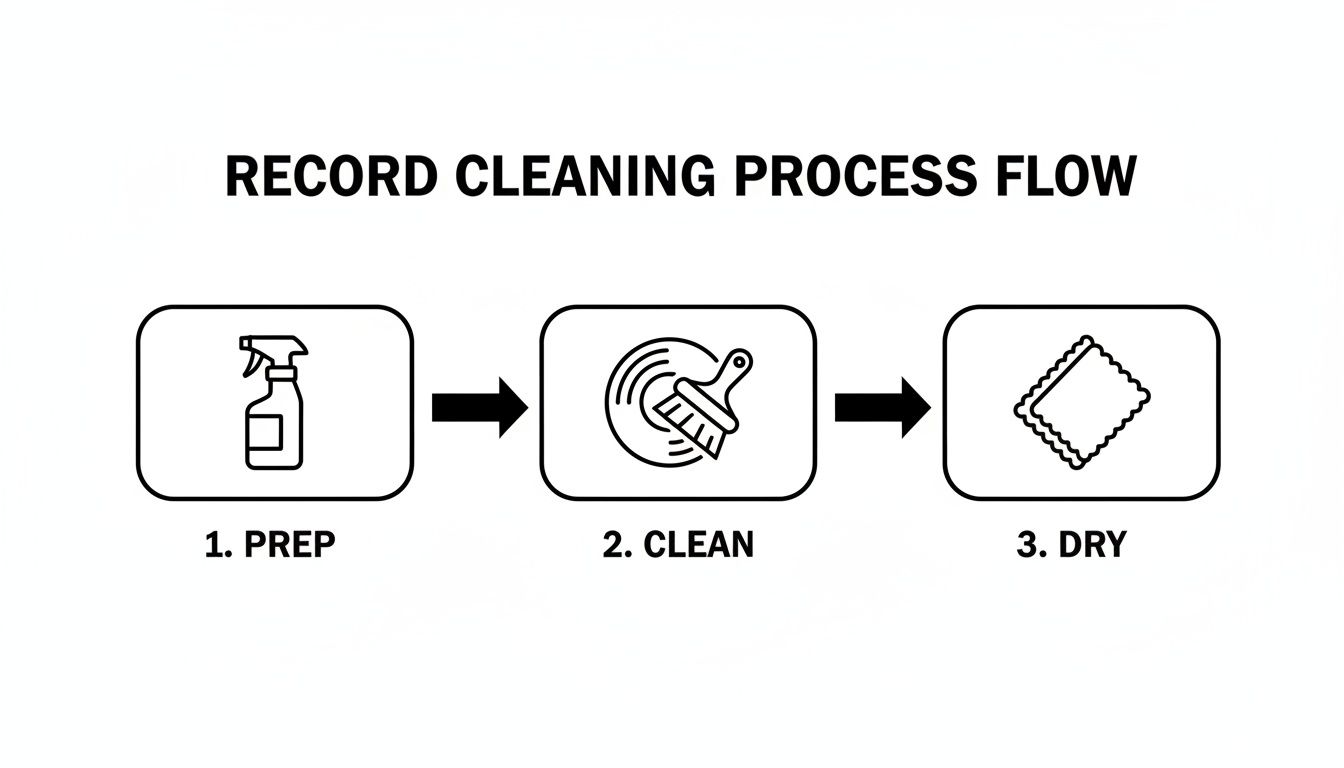
You can see how each step flows logically into the next, creating a systematic approach that cleans thoroughly while protecting the record's delicate surface.
Executing the Perfect Clean
With your station all set, it's time to get down to business. The name of the game here is a gentle, methodical touch. There's absolutely no need for aggressive scrubbing or heavy pressure—in fact, that's a great way to damage the very grooves you're trying to save.
Just follow these steps for a flawless clean:
-
The Dry Brush Pass: Before you introduce any liquid, grab your carbon fiber brush. Hold it gently over the record while it spins on your turntable (or as you turn it by hand on your mat). A couple of rotations is all it takes to lift away loose surface dust and kill any static charge that might make it cling.
-
Apply the Cleaning Solution: Lightly mist the record's surface. A word of caution: Never spray directly onto the label. Moisture can make it bubble, peel, or stain. Aim for 2 to 3 light sprays on the vinyl itself. You want an even, light coating, not a soaked disc.
-
Wipe with the Grooves: Take your microfiber cloth and gently wipe in a circular motion, always following the direction of the grooves. You're not scrubbing; you're guiding the cloth along the tracks. This motion is key to lifting dirt out of the grooves instead of pushing it deeper in.
-
The Final Dry and Polish: Fold your microfiber cloth over to a clean, dry section. Do another circular wipe, again following the grooves, to soak up any leftover moisture. When you're done, the record should look clean and have a nice sheen, but feel completely dry.
-
Flip and Repeat: Now, carefully turn the record over, placing the freshly cleaned side on your mat. Just repeat the whole process for side two.
Pro Tip: Less is more. I see a lot of people putting too much muscle into it. Pushing down hard with the cloth can grind tiny particles right into the vinyl. A light, guiding touch is far more effective and infinitely safer for your records.
Common Mistakes You Must Avoid
Even with the best kit in the world, a few common slip-ups can completely undo all your hard work. Knowing what they are is half the battle.
One of the biggest mistakes is using a dirty cloth. If your microfiber cloth has picked up dust from your shelf or has old grime on it, you're just smearing that gunk right back onto your record. Dedicate one cloth to your vinyl, and keep it clean.
Another classic error is wiping against the grooves. It might feel like you're scrubbing harder, but all you're doing is pushing dirt deeper into those tiny channels and maybe even causing micro-scratches. Always, always move with the record's circular path.
And finally, getting the label wet. A moment of carelessness here can permanently damage a record's appearance. It's so easy to avoid—just always spray the solution onto the vinyl surface itself, well away from the center.
How to Choose the Right Solution for Your Collection
With so many options out there, picking the right record cleaning solution can feel overwhelming. But it doesn't have to be. The best way to cut through the noise is to think about your own collection—its size, its value, and how you listen to it.
Are you a newcomer with a dozen fresh pressings, or are you a die-hard collector with shelves groaning under the weight of vintage vinyl? Knowing where you stand makes the decision a lot simpler. For most of us, a solid all-in-one manual kit hits that sweet spot between professional results and a reasonable price tag.
Assess Your Collector Profile
First things first, take an honest look at your collection and listening habits. Someone with 50 LPs they spin on weekends has completely different cleaning needs than a serious archivist with a room full of rare finds. This isn't about being a "better" collector; it's just about finding the right tool for the job.
Let's see which of these sounds most like you:
- The New Enthusiast: Just getting started? A comprehensive manual kit is your best friend. It gives you everything you need to build good cleaning habits right from the start, without a massive investment.
- The Weekend Spinner: You’ve got a decent collection and you listen often. A quality manual kit is still the perfect workhorse for you. It handles both routine dust-offs and the occasional deep clean with ease.
- The Crate Digger or Archivist: If you’re constantly bringing home stacks of used records or managing a massive library, an automated cleaning machine might be worth the money for sheer efficiency. Even then, you’ll still want a manual kit for quick, targeted clean-ups.
Figuring out where you fit in helps you avoid overspending on features you'll never touch or, worse, getting a kit that can't keep up with your needs. A versatile system like the EVEO 4-in-1 kit is tailor-made for new enthusiasts and weekend spinners—which, let's be honest, covers most of the vinyl community.
Key Factors to Guide Your Decision
Once you’ve got a handle on your collector type, a few practical points will help you narrow down the choices and find your perfect match.
Budget: What are you willing to spend? You can get an incredible manual kit for under $50. Automated machines, on the other hand, are a serious investment, easily running into the hundreds or even thousands of dollars.
Collection Size and Type: The more records you have, the more you might lean toward a faster system. Also, think about what you're cleaning. If your collection includes fragile shellac 78s, you absolutely need an alcohol-free solution to prevent permanent damage.
Available Space: Let’s be real—automated cleaners are big. They need a dedicated spot. Manual kits are the opposite: compact, easy to tuck away, and perfect for anyone working with limited space.
The vinyl comeback has made record care a big deal. The market for cleaners is projected to grow from $121 million to over $183 million by 2033, with North America leading the charge. This isn't surprising when you see that surveys show a 75% preference for manual cleaning kits for personal collections. If you're curious, you can find more details in this record cleaner market report on DataInsightsMarket.com.
By balancing what you need with these practical factors, you can confidently pick a cleaning setup that makes your records sound amazing and protects their value for years to come. While a DIY approach can be tempting, a professionally formulated product is almost always the safer bet to avoid leaving gunk behind or causing accidental damage. To see why, check out our guide on the risks of homemade record cleaning solutions.
Why So Many Collectors Swear By the EVEO Kit
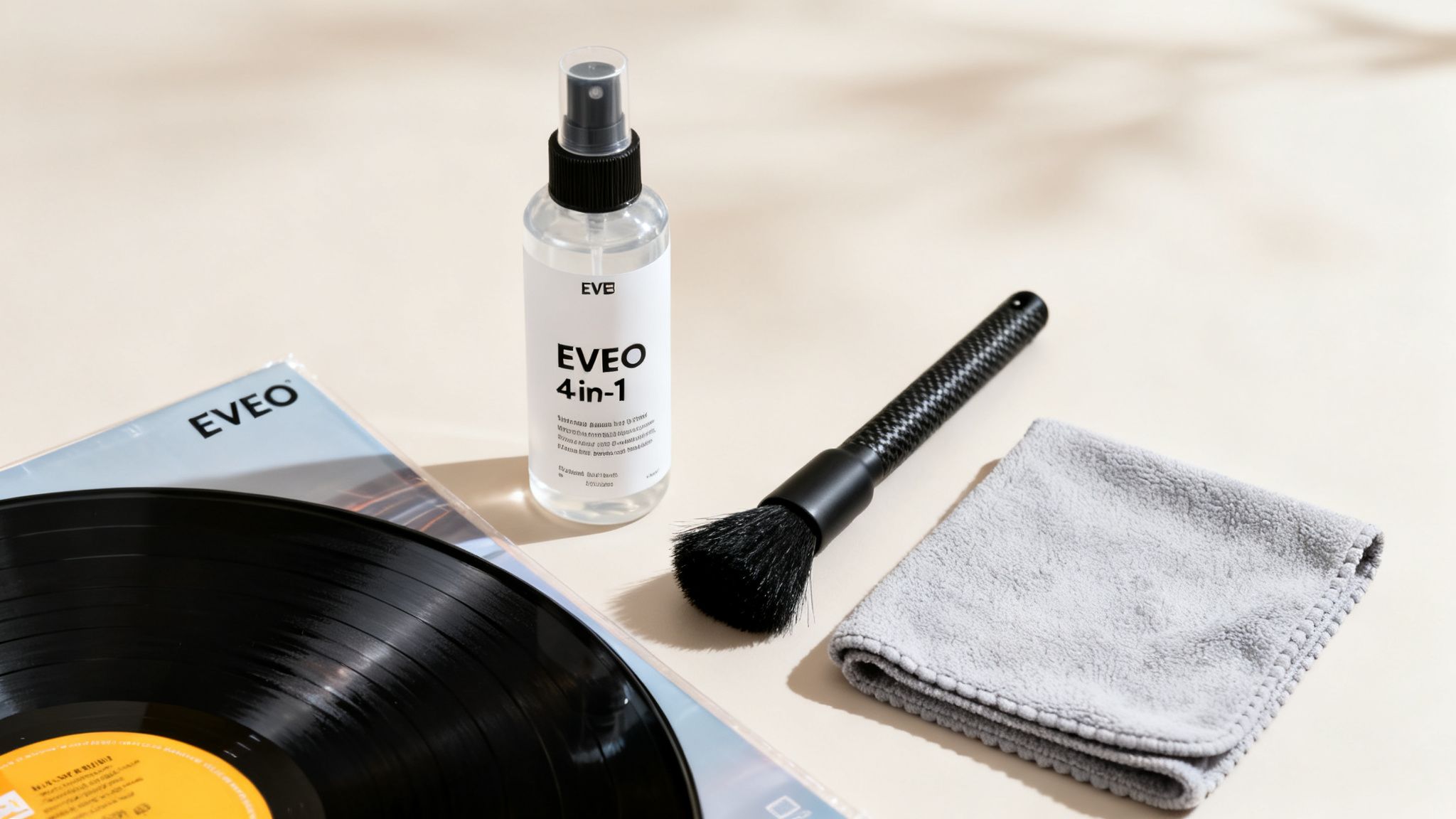
When you're hunting for the best record cleaning solution, you’re really looking for a system that nails three things: it has to be safe for your vinyl, it has to work, and it has to be a good value. This isn't just about wiping off dust; it's about preserving a collection you've put your heart into. The EVEO 4-in-1 Vinyl Record Cleaning Kit gets this, which is why it's become a trusted go-to for millions of record lovers.
What makes it stand out isn't just the collection of tools in a box. It's how thoughtfully they all work together to protect your records and seriously improve how they sound. With its gentle, alcohol-free formula paired with an essential anti-static brush and microfiber cloth, the EVEO kit gives a modern collector everything they actually need.
Built on Quality and a Passion for Preservation
You don't earn the trust of the vinyl community by accident. The EVEO brand has built its reputation on reliability, and more than 100,000 five-star reviews tell that story. Every piece of the 4-in-1 kit is designed with a collector's peace of mind as the top priority.
The cleaning formula, for instance, is engineered to be completely residue-free. This is crucial. Once the grime is lifted, you don't want a new film left behind to gunk up your stylus. That same attention to detail is found in the tools:
- The carbon fiber brush does more than just sweep; it dissipates static, stopping dust from immediately clinging back onto the clean vinyl surface.
- The ultra-soft microfiber cloth is purpose-built to be super absorbent and non-abrasive, so it lifts away the loosened dirt without leaving lint or causing those dreaded micro-scratches.
It’s a complete system where every part supports the goal of a safe, effective clean.
The whole point of a great cleaning system is simple: to make your records sound as close as possible to how the artist and engineer heard them in the studio. It’s an investment in pristine audio and the long-term health of your collection, protecting both its sentimental and monetary value.
The Right Choice for Any Collector's Shelf
It doesn't matter if you're just starting to explore the world of vinyl or if you've been curating your collection for decades. The EVEO kit hits that sweet spot of practicality and performance. It gives you professional-level results without the hefty price tag or complexity of a big automated machine, making it a perfect fit for personal collections of any size.
At the end of the day, cleaning your records is a core part of the vinyl ritual. It's an act of care that brings you closer to the music. Choosing a trusted, all-in-one system like this just ensures that the connection stays strong and the sound stays pure, spin after spin.
A Few Common Questions About Record Cleaning
Even when you've got a great cleaning kit on hand, some questions always seem to come up. Let's tackle some of the most common ones that collectors ask, so you can feel confident you're doing right by your vinyl.
How Often Should I Actually Clean My Records?
This really comes down to a bit of routine maintenance and listening with a critical ear.
Your first line of defense is a quick dry dust before every single spin. Seriously, make this a habit. A simple once-over with a carbon fiber brush picks up loose dust and zaps static before the needle ever drops. It takes five seconds and makes a world of difference.
As for a full-on wet clean? A good rule of thumb is to always clean a record when it first comes into your possession. That goes for brand-new LPs, which can have release agents from the pressing plant still in the grooves, and especially for used finds that have who-knows-what lurking on them.
After that initial deep clean, you only need to break out the fluid again when you hear it. If you're getting persistent pops, clicks, and crackles that a dry brush doesn't solve, it’s time for a proper wash.
Can't I Just Use Tap Water or Windex?
Please don't. This is one of those shortcuts that can cause permanent damage.
Tap water is a big no-go. It's full of minerals—calcium, magnesium, you name it—that will get left behind in the grooves once the water evaporates. These mineral deposits essentially become permanent grit baked into your record, creating noise that you'll never get rid of.
Household cleaners are even worse. Things like window cleaner or all-purpose sprays contain harsh chemicals like ammonia or aggressive detergents. These can literally eat away at the vinyl's surface, causing irreversible harm. Always, always stick to a solution made specifically for records.
The gold standard is simple: a professionally formulated, alcohol-free cleaning fluid, and if you ever need to dilute it or rinse, use only distilled water. This combo ensures you're cleaning away the grime without leaving anything nasty behind.
Is an Alcohol-Based Solution Safe for All My Records?
You’ll see a lot of debate about this online, but the short answer is: not really. While some formulas use a small percentage of isopropyl alcohol, it carries risks.
Alcohol is especially destructive to older shellac 78s, which can become brittle and crack from exposure. But it's not great for modern PVC vinyl in the long run, either. Over time, it can leach out the plasticizers that keep the vinyl flexible, leading to the same kind of brittleness and potential for damage.
For peace of mind across your entire collection, an alcohol-free formula is easily the best and safest bet. It's designed to break down oils and lift dirt effectively without introducing chemicals that could cause harm down the road. You get a powerful clean without the worry.
Ready to give your collection the care it deserves? The EVEO 4-in-1 Vinyl Record Cleaning Kit provides everything you need for a safe, effective, and satisfying clean every time. Discover the trusted choice for collectors at eveo.store.
Finding the Best Monitor Arm for Dual Monitors
Your Guide to Using a Record Player Cleaning Kit for Flawless Sound