
For any serious vinyl lover, the best record cleaning brush is always going to be a high-quality carbon fiber one. Its thousands of conductive bristles do two critical jobs at once: they dig deep into the grooves to lift dust out and simultaneously zap the static charge that attracts new dust in the first place. It’s the single most essential tool for day-to-day record care.
Why a Specialized Brush Is Your First Line of Defense
We’ve all been there. You drop the needle on a favorite album, ready to sink into the music, and instead, you get that dreaded crackle and pop. That noise is almost always the sound of microscopic dust, hair, and grime clogging up the delicate grooves of your record.
Think of those grooves as tiny, intricate canyons carved with sound information. Any speck of dust is like a boulder in the road for your turntable’s stylus, creating distortion that messes with the audio and, over time, causes real, permanent wear.
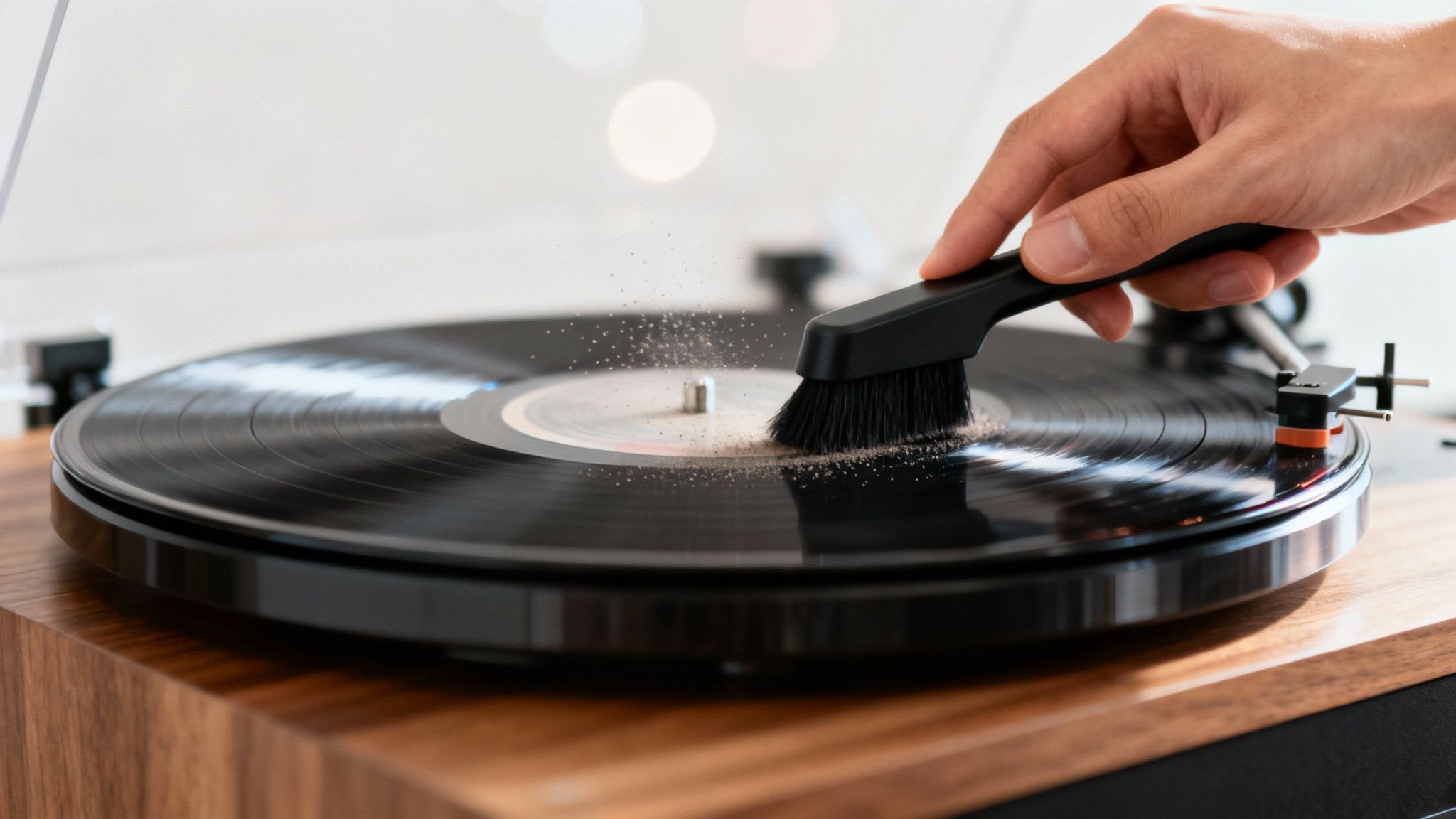
This is exactly why a dedicated record cleaning brush is so indispensable. It's your first and most important line of defense against the everyday elements trying to degrade your collection.
Protecting Your Investment
It might be tempting to grab an old t-shirt or a paper towel for a quick wipe, but trust us, that’s a bad idea. Those materials feel soft to us, but on a microscopic level, they’re abrasive and can etch tiny scratches into the vinyl, permanently wrecking the sound. Even worse, they mostly just push the dirt around instead of actually removing it.
A specialized brush, on the other hand, is engineered to do the job right. It has two core functions:
- Effective Dust Removal: Its ultra-fine bristles are soft enough to be gentle on the vinyl yet firm enough to get deep into the grooves and lift particles out.
- Essential Static Control: Many of the best brushes use conductive carbon fibers. These fibers dissipate the static electricity that acts like a magnet for dust, keeping your records cleaner for longer.
A dedicated brush is a non-negotiable investment. It's not just about cleaning; it's about preserving the audio fidelity and physical integrity of records that can last a lifetime with proper care. You can learn more about the fundamentals in our guide on how to handle vinyl records.
While a good brush is the cornerstone of vinyl care, it's just one piece of the puzzle. For a deeper dive into optimizing your entire listening experience, you might also be interested in learning how to improve overall sound quality. This simple tool is truly the starting point for safeguarding your cherished LPs for years to come.
How a Record Cleaning Brush Actually Works
Think of your record’s grooves as tiny, intricate canyons, with all that beautiful music carved right into the walls. Over time, those canyons inevitably get clogged up with microscopic gunk—dust, dirt, and all sorts of airborne particles. When your turntable's stylus (the needle) tries to navigate this messy terrain, it bumps into all these "boulders," creating the pops, crackles, and hiss that get in the way of your music.
A good record brush is basically a specialized excavation tool for these canyons. Its job isn't just to skim the surface, but to get deep into those grooves, lift all that debris out, and leave the walls clean. This allows the stylus to read the music exactly as it was meant to be heard. It all comes down to two key principles working in perfect harmony.
The Dual Action of Cleaning
The best record cleaning brush is a two-for-one deal. It’s not just about what it physically removes, but also about what it prevents from coming back.
-
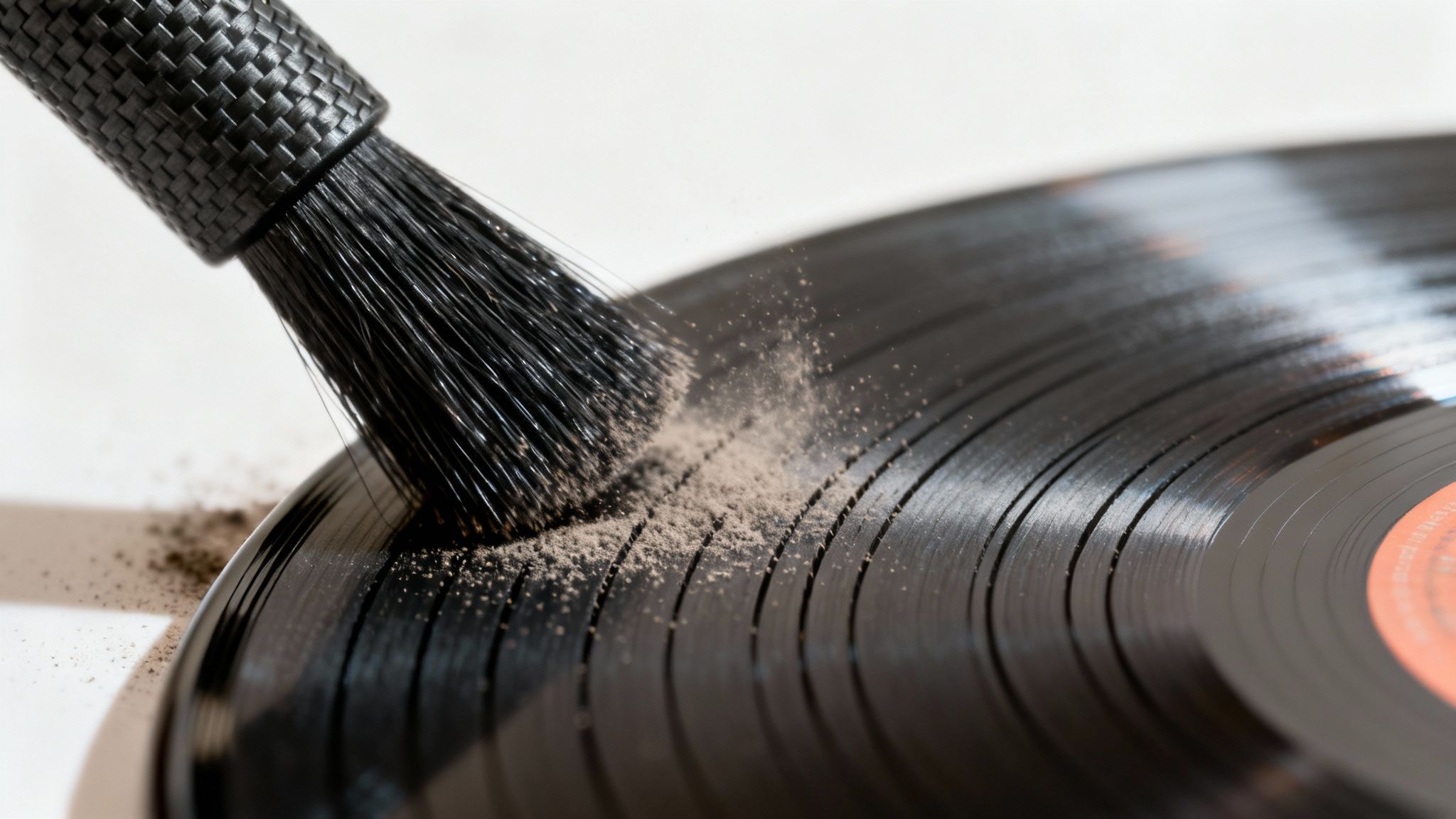
Physical Debris Removal: This is the obvious part. A great brush has thousands of ultra-fine bristles, usually made of carbon fiber, that are thin enough to get right down into the groove. They gently loosen and sweep away settled dust that a regular cloth would just push around or grind in deeper.
-
Static Charge Neutralization: This is the invisible magic trick. Just pulling a record out of its sleeve generates a static charge, turning your pristine vinyl into a powerful dust magnet. It starts attracting new particles from the air almost instantly.
Why Anti-Static Properties Are Crucial
That static charge is the real enemy of a clean record. If you don't deal with it, any cleaning you do is just a temporary fix. This is where the brush's material becomes so incredibly important.
Static electricity on a vinyl record acts like an invisible force field, actively pulling dust from the surrounding environment onto its surface. Neutralizing this charge is just as important as physically removing the existing debris.
This is why carbon fiber is the gold standard for high-quality brushes—it's conductive. As those conductive bristles make contact with the vinyl, they create a path for the static charge to flow away from the record, through the brush, and safely into your hand, which acts as a ground.
By killing the static, the brush doesn't just clean the record; it breaks that magnetic pull that causes dust to resettle right away. Your vinyl stays cleaner for much, much longer. If you're really fighting a battle with static, our guide on how to remove static from vinyl records has some more advanced tips.
Ultimately, a great brush does more than just sweep. It creates an environment that’s hostile to dust, ensuring you get a clearer, richer sound every single time you drop the needle.
Comparing Carbon Fiber and Velvet Brushes
When you start looking for a record cleaning brush, you’ll run into two main players: carbon fiber and velvet. They both work to give you a cleaner, crisper sound, but they’re built for entirely different jobs. Don't think of them as rivals; think of them as specialized tools in your vinyl care toolkit.
One is your daily workhorse, perfect for a quick dust-off before you drop the needle. The other is your deep-cleaning specialist, the one you bring out when a record needs some serious attention. Understanding what each one does best is the secret to keeping your collection in pristine condition.
The Daily Driver: Carbon Fiber
Think of a carbon fiber brush as the essential, everyday duster for your records. Its main job is to zap the surface-level dust and static that builds up between listening sessions. Honestly, this is the tool you’ll probably be reaching for 90% of the time.
The real magic is in its thousands of ultra-fine, conductive bristles. These tiny fibers do two critical things at once:
- Dust Removal: They’re thin enough to get right down into the grooves and gently lift out any loose particles hanging around.
- Static Neutralization: Carbon fiber is naturally conductive, so it dissipates the static charge that literally turns your vinyl into a dust magnet. This anti-static property is its biggest superpower.
Because it tackles both dust and static, a carbon fiber brush is the perfect tool for a quick pre-play clean. A gentle sweep is all it takes to clear away fresh dust and stop new particles from sticking to the record while it’s spinning.
The Deep Cleaner: Velvet
If the carbon fiber brush is for daily upkeep, the velvet brush is for a periodic deep clean. This is the brush you grab when you're dealing with more stubborn stuff like fingerprints, oils, or grime that’s had time to settle into the grooves.
A velvet brush has a soft, padded surface that’s designed to work with a cleaning solution.
The velvet pad acts like a sponge. It evenly spreads the cleaning fluid to dissolve the gunk, then soaks up all the lifted contaminants, pulling them away from the record surface. It’s less about static and more about real scrubbing power.
This makes it the perfect tool for reviving a dusty thrift-store find or cleaning up a record with visible smudges. It’s a bit more involved than a quick dry brush, but it delivers a much deeper, more restorative clean when you really need it.
As more people get serious about vinyl care, specialty brushes have found a dedicated audience. This trend actually mirrors what's happening in the wider household cleaning brush market, which is on track to hit $8,787.2 million by 2033. You can dig into the numbers yourself in the full household cleaning brush market report.
When it comes to picking a brush, it's not about which one is "better," but which one you need for the task at hand. Here's a quick breakdown to help you see the difference.
Carbon Fiber Brush vs Velvet Brush Feature Comparison
| Feature | Carbon Fiber Brush | Velvet Brush |
|---|---|---|
| Primary Use | Daily dusting & static removal | Deep cleaning with fluid |
| Best For | Quick pre-play touch-ups | Fingerprints, oils, embedded grime |
| Mechanism | Lifts dry particles & neutralizes static | Scrubs and absorbs dissolved dirt |
| Usage Frequency | Before every play | Periodically, as needed |
| Requires Fluid? | No, used dry | Yes, for best results |
| Key Advantage | Anti-static properties | Powerful grime removal |
| Effort Level | Low - just a quick sweep | Medium - requires solution and care |
Ultimately, most serious collectors quickly realize that owning both is the smartest move. The carbon fiber brush handles the constant, everyday battle against dust and static, while the velvet brush is always ready to step in and perform a deep clean whenever a record needs a little extra love.
Key Features of the Best Record Cleaning Brush
Once you know whether you need a carbon fiber or velvet brush, it’s time to get into the details—the little things that separate a decent tool from the best record cleaning brush out there. If you're looking to invest in something that will protect your collection for the long haul, a few features are simply non-negotiable. These are the practical, hands-on details that make a real difference in performance, durability, and most importantly, the safety of your vinyl.
Think about it like choosing a good kitchen knife. A cheap one is flimsy, dulls quickly, and makes the job harder. A premium one feels balanced, stays sharp, and gives you a clean, effortless cut every time. The same idea applies here; the quality of the components directly impacts the quality of the clean.
Bristle Density and Material
The bristles are the heart and soul of any great record brush. Their job is to dive deep into those microscopic grooves and pull out gunk without causing even a hint of damage. This is where bristle density is everything.
A top-tier carbon fiber brush will pack in two or more rows of thousands of ultra-fine bristles. That density isn't just for show—it’s critical for two big reasons:
- Deeper Cleaning: More bristles mean more contact points inside the groove. This allows the brush to gently lift out the tiniest dust particles that sparser, thicker bristles would just skate right over.
- A Softer Touch: High density spreads out the light pressure you apply across the record's surface, which drastically reduces any risk of scratching the delicate vinyl.
Cheaper brushes often skimp here, using fewer, thicker plastic bristles that can’t really get into the grooves and might even cause micro-scratches over time. Always look for a brush that’s proud of its high bristle count.
A dense, dual-row carbon fiber design is like a fine-toothed comb for your record grooves. It meticulously clears out debris from top to bottom, giving you a truly deep dry clean with every single pass.
This demand for better tools is part of a bigger trend. The global market for vinyl record cleaners is booming, projected to jump from $450 million in 2025 to $710 million by 2033. That surge shows just how committed collectors are to investing in quality gear to maintain their records. You can dig into the numbers yourself in the full vinyl record cleaner market report.
Handle Ergonomics and Conductivity
While the bristles get all the glory, the handle has an equally vital job: getting rid of static. For an anti-static brush to actually work, it needs a conductive path from the bristles, through the handle, and into your hand, which grounds the charge.
Keep an eye out for a brush with a metal or conductive plastic handle. This gives the static electricity collected by the carbon fibers a clear path to exit, neutralizing the charge on the record. Cheap, all-plastic handles completely fail at this, making the anti-static claims of the bristles pretty much useless.
Ergonomics matter, too. A comfortable, well-balanced handle makes the whole process easier and gives you more control. A quality brush just feels solid and reliable in your hand—a sure sign of good build quality that will make it a trusted part of your vinyl care routine for years.
Mastering the Art of Brush Cleaning
Having a great record cleaning brush is one thing, but knowing how to use it is where the magic really happens. This isn't about scrubbing; it's a delicate technique. With the right touch, you can lift away every speck of dust and banish static without ever risking damage to those precious grooves.
The secret is simple: let the turntable do the heavy lifting. Your only job is to guide the brush with the lightest possible touch and use a specific scooping motion to lift the debris off the record, not just push it around.
Your Step-by-Step Cleaning Guide
Ready to get that perfect, crackle-free sound? Put your record on the platter, get it spinning, and follow these steps.
- Position the Brush: Hold the brush by its handle. If it has a metal part, make sure your fingers are touching it to help ground any static electricity. Gently lower the carbon fiber bristles onto the spinning record, holding it at about a 90-degree angle to the grooves.
- Apply Feather-Light Pressure: Let the brush's own weight do the work. You should apply almost no downward pressure at all. The goal is just to let the thousands of tiny bristles dip into the grooves and work their magic. Keep it steady for two or three full rotations.
- The "Scoop" Motion: This is the most important part. Instead of just lifting the brush straight up, slowly angle it toward the center of the record. You'll see all the dust it collected gather into a neat little line. Then, in one smooth motion, sweep the brush up and away from the edge of the record, scooping all that gunk off the surface for good.
This process is so effective because of how a premium brush is designed.

As you can see, the ultra-fine bristles get deep into the grooves, the conductive handle neutralizes static, and the solid construction gives you the control you need for that perfect scooping motion.
Common Mistakes to Sidestep
Even with the best intentions, a few common slip-ups can turn a cleaning session sour. Make sure you're not doing any of these:
- Pressing Too Hard: This is the #1 mistake people make. Mashing the brush down can bend the bristles and, even worse, scratch your vinyl. Be gentle!
- Using a Dirty Brush: A brush that’s already loaded with dust from your last record will just spread the mess around. Give your brush a quick clean after every single use.
- Lifting Straight Up: If you just pull the brush straight off the record, you'll leave that line of dust you just collected sitting right there on the vinyl, defeating the whole purpose. Always remember the scoop.
When It's Time for a Full Vinyl Cleaning Kit
While a good record cleaning brush is your daily driver for maintenance, think of it like sweeping your floor. It handles the everyday dust and keeps things looking tidy, but eventually, you'll need to break out the mop and bucket to deal with the real, ground-in grime.
The exact same principle applies to your vinyl. A simple dry brush is essential, but it just can’t handle everything. For those deeper cleaning jobs, a full vinyl cleaning kit is the only way to go.
Scenarios Demanding a Deeper Clean
So, when do you put down the daily brush and reach for the full kit? You'll know it's time when you run into situations like these:
- Restoring Thrift-Store Finds: That amazing record you scored at a flea market might be a gem, but it's probably carrying years of accumulated dust, fingerprints, and mystery gunk deep in its grooves.
- Removing Oily Fingerprints: Accidents happen. The natural oils from your skin are stubborn, and a dry brush will often just smear them around, making the problem even worse.
- Tackling Deep-Seated Grime: For those visible smudges or records that have been sitting unprotected on a shelf for years, you need the power of a cleaning fluid to actually dissolve and lift the dirt out.
A full cleaning kit doesn't replace your daily brush—it's a specialized solution for heavy-duty restoration. It tackles problems that go far beyond surface-level dust, bringing back audio clarity when a simple sweep just isn't enough.
The growing popularity of these kits shows just how serious collectors are getting about preservation. In 2024, the global market for record cleaning kits was valued between $245.8 million and $272.8 million, proving that enthusiasts are willing to invest in keeping their collections pristine. You can dig deeper into this trend and its impact on vinyl preservation.
The Power Trio of a Full Kit
A complete cleaning kit, like EVEO’s 4-in-1 system, isn't just one tool; it's a team of them working together for a total restoration. Each piece has a critical job to do:
- Cleaning Fluid: This is your solvent. It’s specially formulated to gently dissolve stubborn grime and oils without harming the delicate vinyl.
- Velvet Brush: This isn't your everyday dry brush. It's designed to be used with the fluid, scrubbing deep into the grooves to agitate and absorb all that dissolved dirt.
- Stylus Brush: Finally, a dedicated stylus brush safely removes any gunk that has inevitably built up on your turntable's needle, ensuring a clean connection to the groove.
Knowing when to deploy the full kit is a crucial part of total vinyl care. You can learn more about what to look for in our guide to the best vinyl record cleaning kit.
Your Record Brush Questions, Answered
Even after you've got the basics down, a few questions always pop up when it comes to the day-to-day use of a record brush. Getting these details right is what separates a good listening session from a great one and keeps your collection sounding pristine for years to come.
Let's tackle some of the most common ones.
How Often Should I Actually Use My Brush?
Simple answer: before every single play.
Making this a habit is one of the best things you can do for your vinyl. A quick two-rotation sweep with a carbon fiber brush takes less than 30 seconds, but the payoff is huge. It clears off any surface dust that’s settled since the last spin and kills the static charge that would otherwise attract even more dust once the platter starts moving.
Think of it as essential preventative maintenance. It stops tiny particles from building up and getting ground into the grooves by your stylus over time, preserving both your records and your needle.
And How Do I Clean the Brush Itself?
This is just as important as cleaning your records. A dirty brush just moves grime from one album to another, completely defeating the purpose. Thankfully, it's incredibly easy to do.
Most quality carbon fiber brushes are designed with a built-in cleaning system. You’ll notice the handle often doubles as a protective cover that you can rock back and forth over the bristles. This simple motion scrapes away all the gunk the brush has picked up.
For a more thorough clean, you can gently run a fine-toothed comb through the bristles to free any stubborn, trapped particles. Just make sure the brush is completely clean and dry before it goes anywhere near your vinyl.
A clean tool is the foundation of a truly clean listening experience. This quick step ensures you’re always lifting dust off your records, not just pushing it around.
Ready to protect your collection and hear your music with crystal clarity? The EVEO 4-in-1 Vinyl Record Cleaning Kit has everything you need for both daily touch-ups and deep, restorative cleaning. Discover the difference a professional clean can make.
Finding the Best Vinyl Record Cleaning Kit for Your Collection
Your Guide to the Best Record Cleaning Solution Homemade